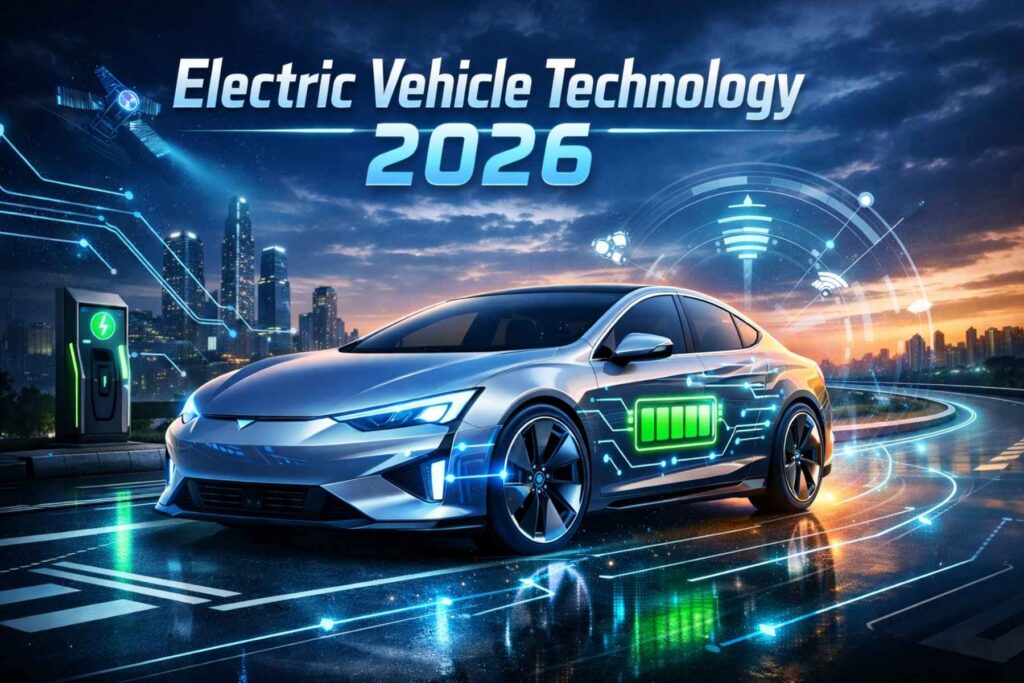
The Rise of Electric Vehicle Technology 2026
The global automotive industry is experiencing its most dramatic transformation in decades. At the center of this revolution lies Electric Vehicle Technology 2026, a powerful convergence of artificial intelligence, next-generation battery systems, and autonomous driving innovation. What once seemed like a distant future is now becoming mainstream reality.
In 2026, electric vehicles are no longer just an environmentally friendly alternative. They are smarter, faster, safer, and more connected than traditional fuel-powered cars. Governments, manufacturers, and consumers worldwide are embracing EVs as the future of transportation, driven by rising fuel costs, climate commitments, and rapid technological breakthroughs.
This article explores how AI-powered EVs, battery breakthroughs, and self-driving technology are reshaping mobility in 2026 and why Electric Vehicle Technology 2026 is set to dominate roads globally.
Why Electric Vehicles in 2026 Are Smarter Than Ever
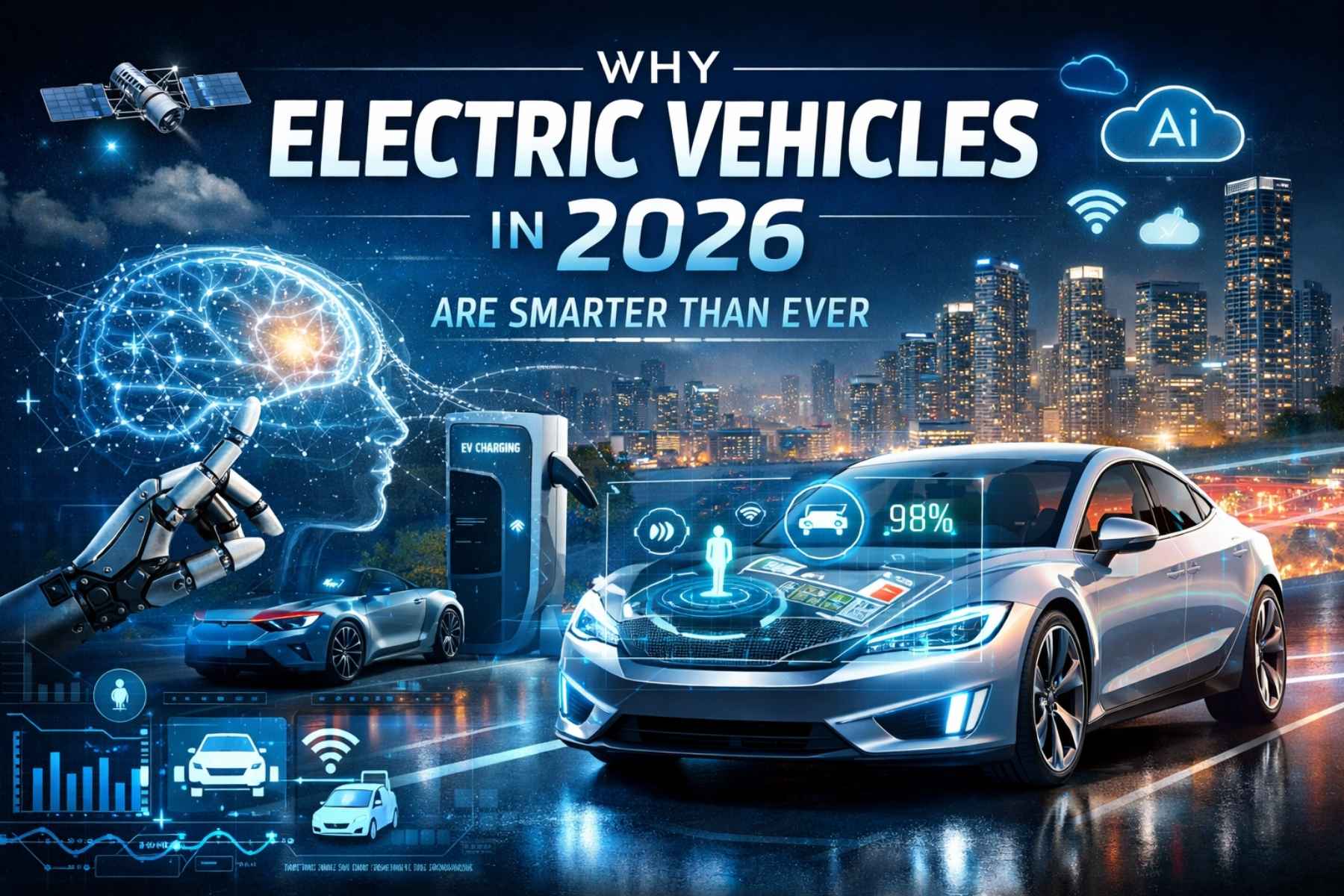
Imagine a car that learns your driving habits, predicts maintenance issues before they occur, optimizes battery usage in real time, and can safely drive itself in traffic. This is not science fiction, it is the reality of Electric Vehicle Technology 2026.
Unlike early EVs that focused mainly on reducing emissions, modern electric vehicles integrate advanced software, intelligent sensors, and machine-learning systems. These innovations are redefining performance, safety, and convenience, making EVs a smarter choice for drivers worldwide.
Understanding Electric Vehicle Technology 2026
Electric Vehicle Technology 2026 refers to the latest generation of EV systems that combine:
- Artificial Intelligence (AI) for smart decision-making
- Advanced battery technologies for longer range and faster charging
- Autonomous driving features powered by sensors and real-time data
- Cloud connectivity and over-the-air software updates
Together, these technologies create intelligent vehicles capable of adapting to both drivers and environments.
The Global Shift Toward Electric Vehicles
The adoption of electric vehicles has accelerated rapidly over the last few years. By 2026, EVs are no longer limited to luxury buyers or early adopters.
Key Factors Driving EV Growth
- Strict emission regulations worldwide
- Rising fuel prices and energy insecurity
- Government incentives for EV buyers
- Improved charging infrastructure
- Consumer demand for smart, connected vehicles
Electric Vehicle Technology 2026 is the backbone supporting this global shift, enabling mass adoption and long-term sustainability.
AI-Powered EVs: The Brain Behind Modern Electric Vehicles
Artificial intelligence plays a central role in modern electric vehicles. In 2026, AI is not just an add-on feature it is deeply embedded into every aspect of EV operation.
How AI Is Transforming EV Performance
AI systems analyze vast amounts of data from sensors, cameras, and vehicle components. This allows EVs to:
- Optimize energy consumption
- Improve driving efficiency
- Enhance safety through predictive analytics
- Personalize driving experiences
AI enables electric vehicles to think, learn, and respond intelligently in real time.
AI-Driven Energy Management Systems
One of the most impactful applications of AI in Electric Vehicle Technology 2026 is energy management. AI algorithms monitor battery health, driving behavior, road conditions, and weather to maximize efficiency.
Benefits of AI Energy Optimization
- Extended driving range
- Reduced battery degradation
- Smarter regenerative braking
- Accurate range prediction
This makes EV ownership more reliable and cost-effective for consumers.
Smart Driver Assistance Powered by AI
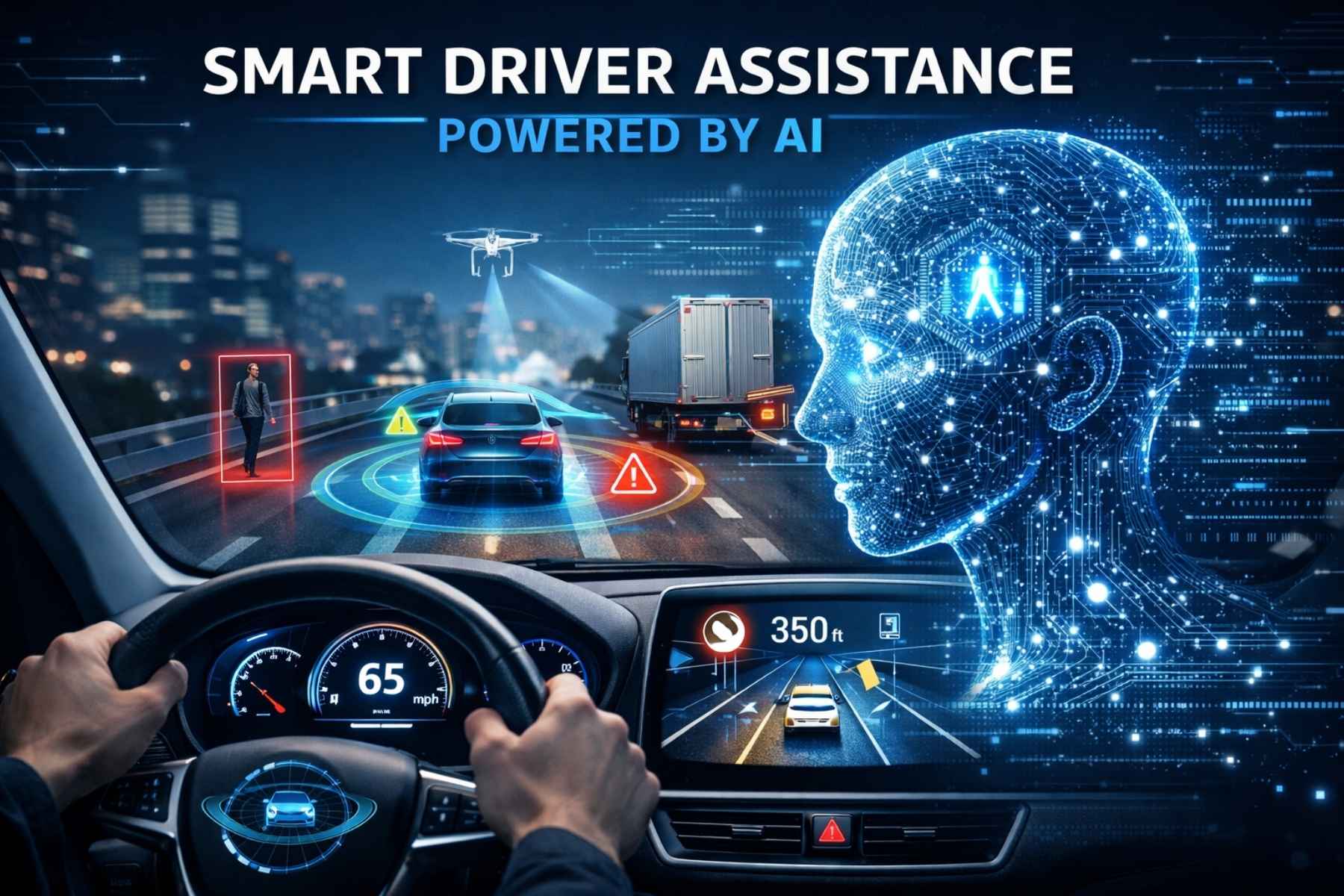
Advanced Driver Assistance Systems (ADAS) have evolved significantly by 2026. AI enhances these systems by enabling:
- Adaptive cruise control
- Lane-keeping assistance
- Collision avoidance
- Pedestrian detection
These features reduce accidents and make driving safer, especially in urban environments.
Connected EV Ecosystems
Electric Vehicle Technology 2026 also emphasizes connectivity. AI-powered EVs are now part of a larger digital ecosystem.
Connected Features Include
- Real-time traffic updates
- Smart navigation and route optimization
- Remote vehicle monitoring via mobile apps
- Over-the-air software updates
This connectivity ensures vehicles continuously improve even after purchase.
Why AI Is Essential for the Future of EVs
Without AI, electric vehicles would lack intelligence, adaptability, and safety. AI enables automation, predictive maintenance, and real-time decision-making all critical components of next-generation transportation.
Electric Vehicle Technology 2026 relies on AI to bridge the gap between hardware and human needs, creating vehicles that are not only electric but intelligent.
Battery Breakthroughs: The Heart of Electric Vehicle Technology 2026
Batteries are the lifeblood of electric vehicles. In 2026, Electric Vehicle Technology 2026 is being redefined by next-generation battery systems that promise longer range, faster charging, and enhanced durability.
While early EVs relied on lithium-ion batteries with limitations in range and charging speed, modern innovations have overcome many of these challenges. These advancements are essential for mass adoption, affordability, and sustainable EV growth worldwide.
Solid-State Batteries: The Game Changer
One of the most significant innovations is the solid-state battery (SSB). Unlike traditional lithium-ion batteries, solid-state batteries use a solid electrolyte instead of liquid. This results in:
- Higher energy density → longer range per charge
- Faster charging → some models charge up to 80% in under 15 minutes
- Improved safety → lower risk of overheating or fire
- Extended lifespan → reduced degradation over time
Many top EV manufacturers, including Tesla, Toyota, and Hyundai, are racing to integrate solid-state batteries into their 2026 models. This technology is expected to revolutionize electric mobility and further push EVs into mainstream adoption.
Ultra-Fast Charging Technology
Charging speed remains a crucial concern for consumers. Modern EVs leverage breakthroughs in ultra-fast charging powered by AI-optimized battery management systems.
Key Innovations
- High-voltage charging (up to 800V)
- Smart heat management to prevent overheating
- AI-controlled energy flow for optimized charging
- Supercharger networks with rapid delivery
With these advancements, charging times are approaching the convenience of traditional fuel refills, making EVs more practical for everyday use and long-distance travel.
Longer Range: Solving Range Anxiety
Range anxiety, the fear of running out of battery mid-trip—has historically hindered EV adoption. Electric Vehicle Technology 2026 addresses this with:
- Batteries that can power EVs 400–600 miles per charge
- Regenerative braking systems enhanced with AI
- Smart route planning to optimize energy consumption
- Integration with renewable energy sources like solar rooftops
As a result, drivers can confidently replace their combustion engine cars without worrying about battery limitations.
Battery Sustainability and Recycling
With EV adoption growing rapidly, battery sustainability has become a top priority. Modern Electric Vehicle Technology 2026 focuses on:
- Recyclable battery components
- Second-life applications for used EV batteries (e.g., energy storage for homes)
- Ethical sourcing of lithium, cobalt, and nickel
- Reduced environmental impact through advanced manufacturing techniques
These practices not only reduce the ecological footprint but also ensure the long-term viability of EV technology.
AI-Optimized Battery Management Systems
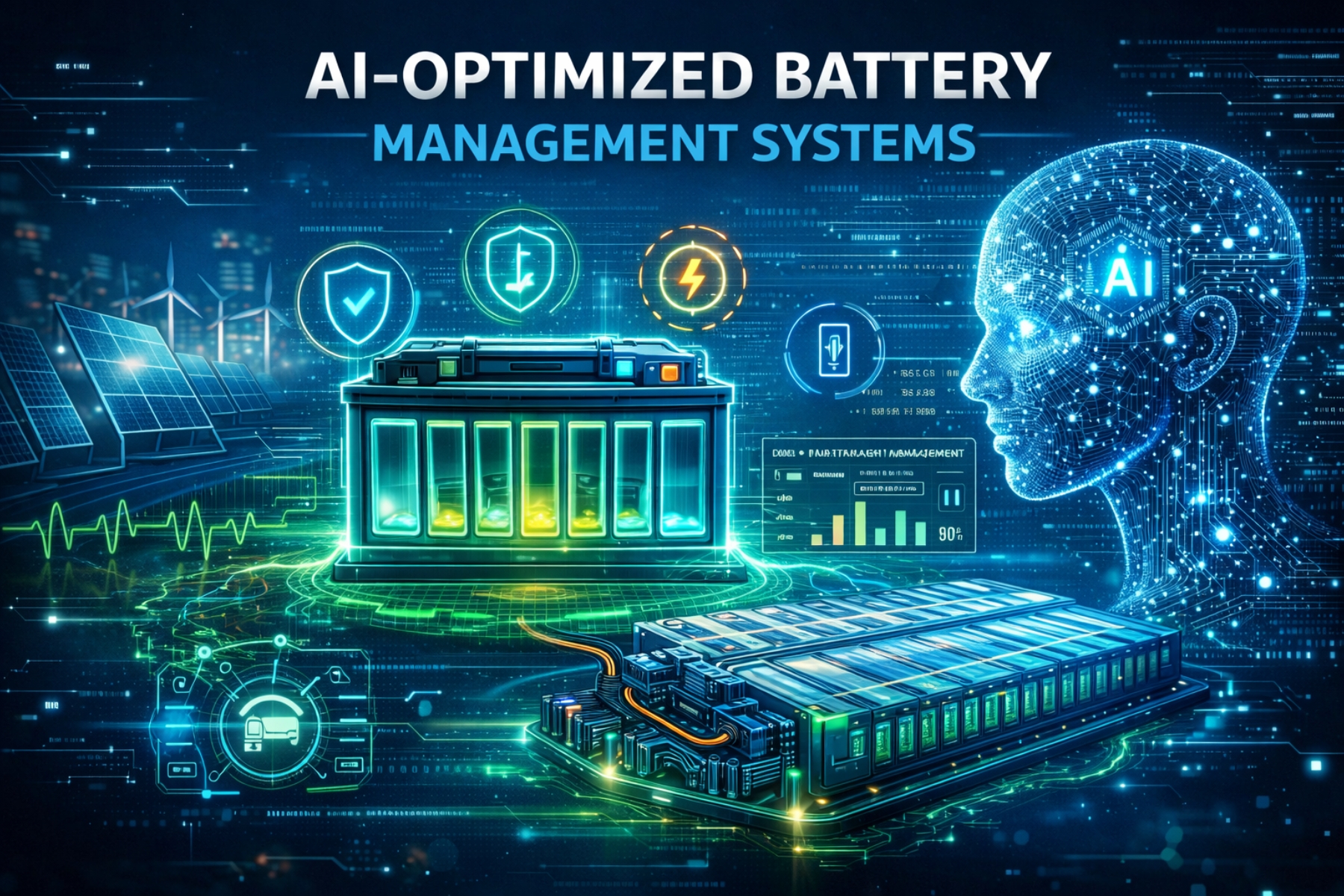
AI is not just powering driving and safety features, it’s revolutionizing how batteries are monitored and managed. AI-powered Battery Management Systems (BMS) can:
- Predict battery degradation before it occurs
- Balance charge across all cells efficiently
- Prevent overheating and potential hazards
- Enhance overall performance and lifespan
By integrating AI with battery technology, EVs achieve maximum efficiency, safety, and reliability.
Charging Infrastructure and Smart Grids
Advanced batteries need smart charging networks to support them. 2026 sees EVs connected to AI-driven grids, allowing:
- Dynamic load balancing
- Time-of-use optimization to save energy costs
- Renewable energy integration
- Vehicle-to-grid (V2G) energy sharing
This ecosystem ensures that Electric Vehicle Technology 2026 is not only smarter for drivers but also for cities and energy systems.
Battery Innovations in Top EV Models
Several EV manufacturers are leading the battery revolution:
| Producer | Battery Innovation | Impact |
| Tesla | 4680 Cells + AI BMS | Faster charging & longer lifespan |
| Toyota | Solid-State EV Battery | Safer & higher energy density |
| Hyundai | EV Battery Swaps + Ultra-Fast Charging | Reduced downtime, better convenience |
| BMW | Recycling & Sustainable Materials | Eco-friendly & cost-efficient |
These breakthroughs ensure that Electric Vehicle Technology 2026 is not only futuristic but practical and scalable for consumers.
Why Battery Innovation Matters
Without battery innovation, EVs would remain niche products. Today, Electric Vehicle Technology 2026 shows that long-range, fast-charging, sustainable batteries are making EVs a viable alternative for mass adoption globally.
Battery breakthroughs combined with AI and autonomous driving are the three pillars of modern EV technology, each enhancing the other to create intelligent, efficient, and safe vehicles.
Autonomous Driving: The Future of Mobility
One of the most revolutionary aspects of Electric Vehicle Technology 2026 is autonomous driving. Self-driving EVs are no longer just experimental prototypes; they are ready for commercial use, transforming how people commute, deliver goods, and even manage fleets.
Autonomous EVs combine AI, sensors, real-time data, and advanced algorithms to navigate roads safely and efficiently. By 2026, many vehicles are already capable of Level 4 autonomy, meaning they can handle most driving tasks without human intervention.
How Autonomous EVs Work
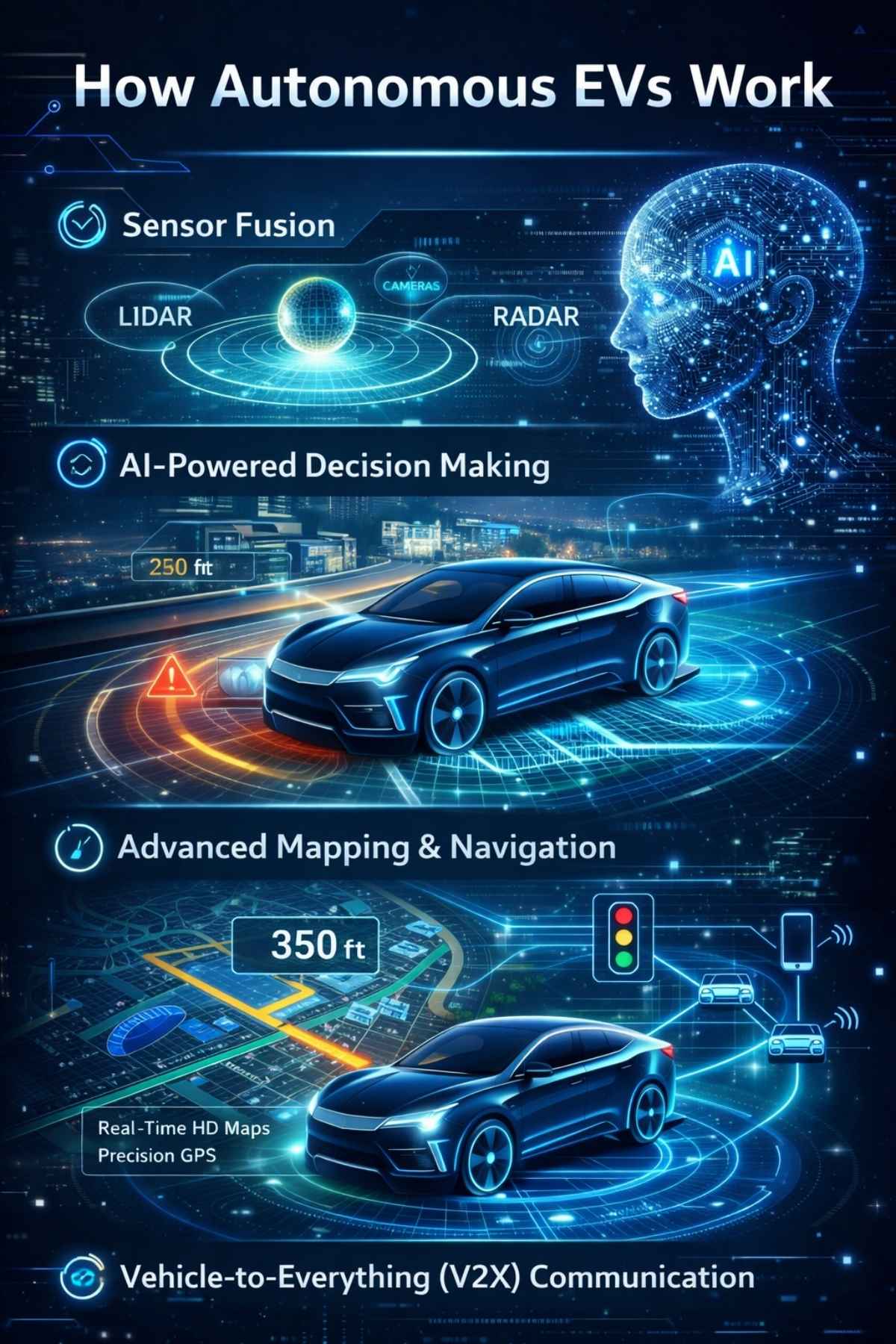
Autonomous driving relies on a sophisticated combination of technologies:
1. Sensor Fusion
- LiDAR, radar, and cameras collect data from the environment
- Sensors work together to create a 360° view of surroundings
- Enables precise detection of pedestrians, vehicles, and obstacles
2. AI-Powered Decision Making
- Machine learning algorithms analyze real-time data
- Vehicles predict the movement of other road users
- AI optimizes routes, speed, and safety maneuvers
3. Advanced Mapping & Navigation
- High-definition maps provide detailed road information
- GPS integration ensures precise localization
- Dynamic map updates adapt to changing traffic conditions
4. Vehicle-to-Everything (V2X) Communication
- EVs communicate with other vehicles, traffic lights, and smart infrastructure
- Reduces congestion and prevents collisions
- Supports cooperative driving in cities
Levels of Autonomy in 2026
Autonomous driving is classified into six levels (0–5). In 2026, EVs primarily operate at:
- Level 2–3: Partial automation with driver supervision
- Level 4: High automation, no human input needed in most conditions
- Level 5: Full autonomy, capable of self-driving anywhere (still in testing)
Many Electric Vehicle Technology 2026 innovations focus on Level 4, making self-driving EVs a practical reality for urban and highway driving.
AI and Autonomous Driving Integration
AI is the core enabler of autonomous EVs. It allows vehicles to:
- Learn driving patterns from millions of real-world scenarios
- Predict hazards and react faster than human drivers
- Optimize energy consumption in tandem with battery systems
- Continuously improve through software updates
AI ensures that Electric Vehicle Technology 2026 is safe, efficient, and intelligent.
Safety Advantages of Autonomous EVs
Safety is the biggest driver for self-driving EV adoption. Autonomous vehicles significantly reduce:
- Human error-related accidents (over 90% of crashes are human error)
- Risk in adverse weather or poor visibility
- Fatigue-related driving incidents
AI-powered autonomous EVs monitor surroundings continuously, making decisions with precision and reliability beyond human capabilities.
Regulatory & Infrastructure Developments
Governments worldwide are adapting regulations to allow autonomous EVs on roads safely. Key initiatives include:
- Legal frameworks for Level 4 driving in cities
- Standards for AI decision-making transparency
- Investments in smart infrastructure supporting V2X communications
- Testing zones and pilot programs for commercial deployment
These developments ensure that Electric Vehicle Technology 2026 is both innovative and compliant with global safety standards.
Autonomous Fleet Management
Beyond individual vehicles, autonomous EVs are transforming commercial transportation:
- Self-driving delivery vans reduce costs and improve efficiency
- Autonomous ride-sharing fleets increase accessibility and reduce congestion
- Integration with AI logistics platforms optimizes routes and energy usage
By 2026, fleets powered by autonomous EVs are already operating in major cities worldwide, showcasing the practical benefits of this technology.
Challenges & Solutions in Autonomous EVs
Despite advancements, there are still challenges:
- Weather conditions: Snow, rain, and fog affect sensor performance
- Complex urban traffic: Navigating crowded streets with unpredictable behavior
- Cybersecurity threats: Protecting AI systems from hacking
Solutions in 2026 include:
- Sensor fusion and AI algorithms that work in all weather conditions
- Simulation-based training of AI systems for rare scenarios
- Robust cybersecurity protocols and encryption for autonomous systems
Why Autonomous Driving Completes the EV Revolution
Autonomous driving, combined with AI-powered systems and next-gen batteries, makes Electric Vehicle Technology 2026 a complete package:
- Smarter energy management
- Safer driving experience
- Reduced congestion and emissions
- Enhanced mobility for all demographics
Electric vehicles are no longer just “electric”; they are intelligent, adaptive, and self-driving machines, poised to redefine transportation globally.
Integration of AI, Batteries & Autonomous Systems
The true power of Electric Vehicle Technology 2026 lies in the seamless integration of three pillars:
- AI-Powered Driving: Enhances efficiency, safety, and personalization
- Battery Breakthroughs: Provides long range, fast charging, and sustainability
- Autonomous Driving: Redefines mobility and reduces accidents
By combining these technologies:
- Vehicles can optimize energy consumption dynamically based on real-time data
- Autonomous systems adjust driving patterns to battery conditions
- AI predicts maintenance needs and performance issues before they happen
- EVs become smart, self-sufficient transportation units
This synergy creates a next-generation mobility ecosystem that is safe, efficient, and user-friendly.
Future Trends in Electric Vehicle Technology 2026
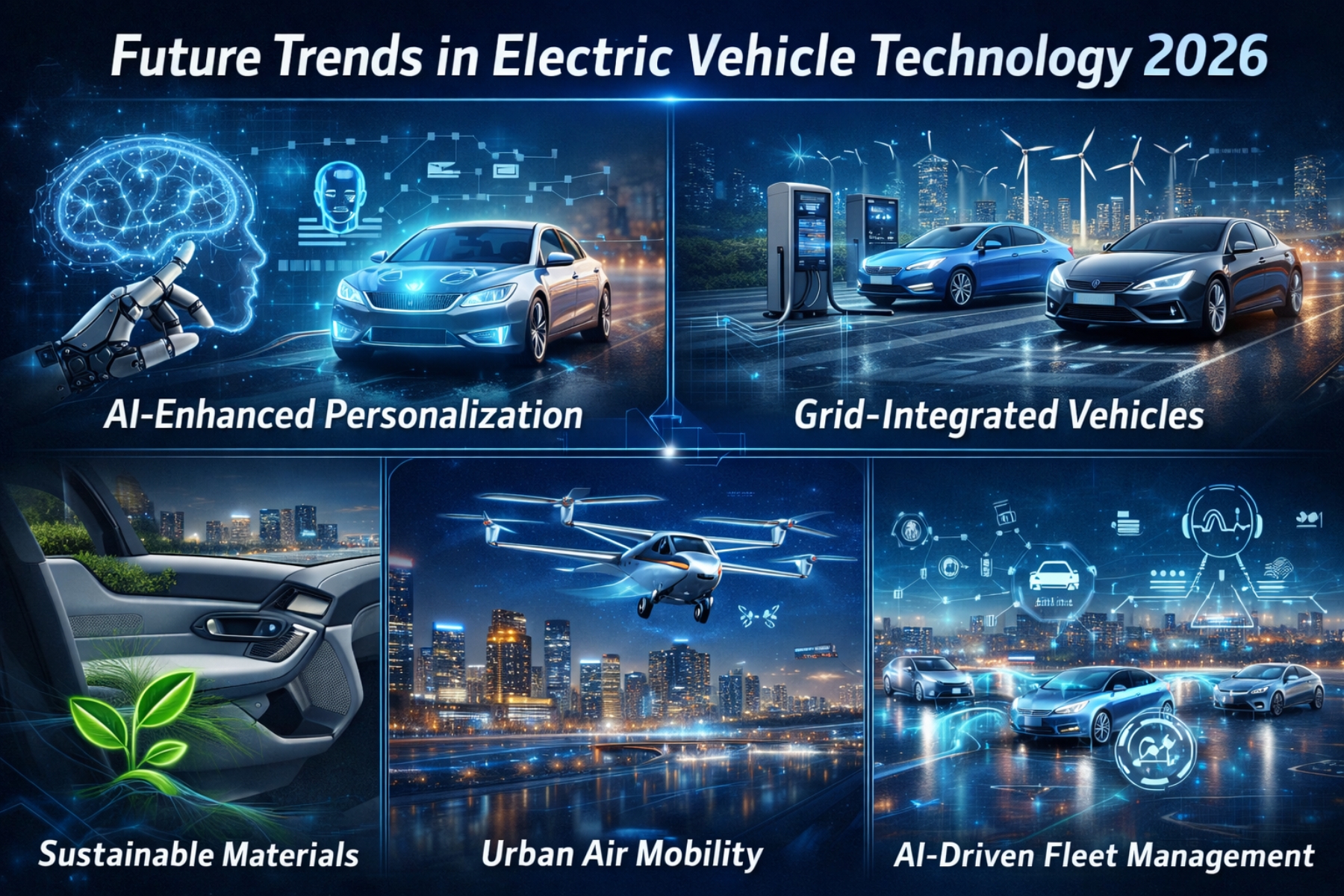
Looking ahead, the following trends are shaping the future of EVs:
1. AI-Enhanced Personalization
- Vehicles adapt to driver preferences, habits, and schedules
- Intelligent infotainment and predictive route planning
2. Grid-Integrated Vehicles
- EVs interact with smart grids for energy storage and sharing
- Vehicle-to-Grid (V2G) technology allows homes and businesses to benefit from EV batteries
3. Sustainable Materials
- EVs increasingly use recycled and eco-friendly materials
- Reduces carbon footprint and supports circular economy
4. Urban Air Mobility
- Integration with electric vertical take-off and landing (eVTOL) vehicles
- Expands the concept of EVs beyond roads to the skies
5. AI-Driven Fleet Management
- Autonomous delivery and ride-sharing fleets reduce costs
- AI ensures optimal routing, energy usage, and safety compliance
Frequently Asked Questions
Q1: What is Electric Vehicle Technology 2026?
A: It refers to the latest advancements in EVs combining AI-driven systems, next-generation batteries, and autonomous driving capabilities.
Q2: How long can EVs run on a single charge in 2026?
A: Thanks to battery breakthroughs like solid-state batteries, EVs can run 400–600 miles per charge, depending on the model and driving conditions.
Q3: Are autonomous EVs safe to drive?
A: Yes. Level 4 autonomous EVs use AI, sensors, and predictive algorithms to minimize accidents, monitor surroundings, and respond faster than human drivers.
Q4: How fast can 2026 EVs charge?
A: Ultra-fast charging technologies allow some EVs to charge up to 80% in under 15 minutes, powered by AI-optimized battery management.
Q5: How does AI improve electric vehicles?
A: AI enhances driving efficiency, energy optimization, safety systems, predictive maintenance, and provides a personalized driving experience.
Conclusion
Electric Vehicle Technology 2026 represents the culmination of decades of innovation. The fusion of AI, advanced batteries, and autonomous driving is transforming how we move, commute, and live.
From longer ranges and ultra-fast charging to self-driving safety and smart connectivity, modern EVs are no longer just electric, they are intelligent machines designed for the future.
The transition to Electric Vehicle Technology 2026 is inevitable and necessary for a sustainable, efficient, and smart transportation ecosystem. Early adopters, manufacturers, and policymakers embracing these technologies will define the next era of mobility.
Explore More: AI Smartphones 2026: The Future of Mobile Technology