Why 2026 Will Redefine the Future of Technology
Technology has always evolved rapidly, but 2026 represents a turning point unlike anything we have seen before. The convergence of artificial intelligence, automation, immersive digital experiences, and sustainable innovation is creating a new technological era, one where machines are smarter, systems are autonomous, and digital experiences feel almost human.
Unlike past years, innovation in 2026 is not limited to experimental labs or elite tech companies. Instead, Future Tech Trends 2026 are directly impacting everyday life, global businesses, healthcare systems, education, and even how governments operate. From AI-powered workplaces to intelligent cities and next-generation computing, technology is no longer supporting human life, it is actively shaping it.
This article explores the most important future technology trends of 2026, explaining how they work, why they matter, and how they will transform the digital world in the years ahead.
Why Everyone Is Talking About Future Tech Trends 2026
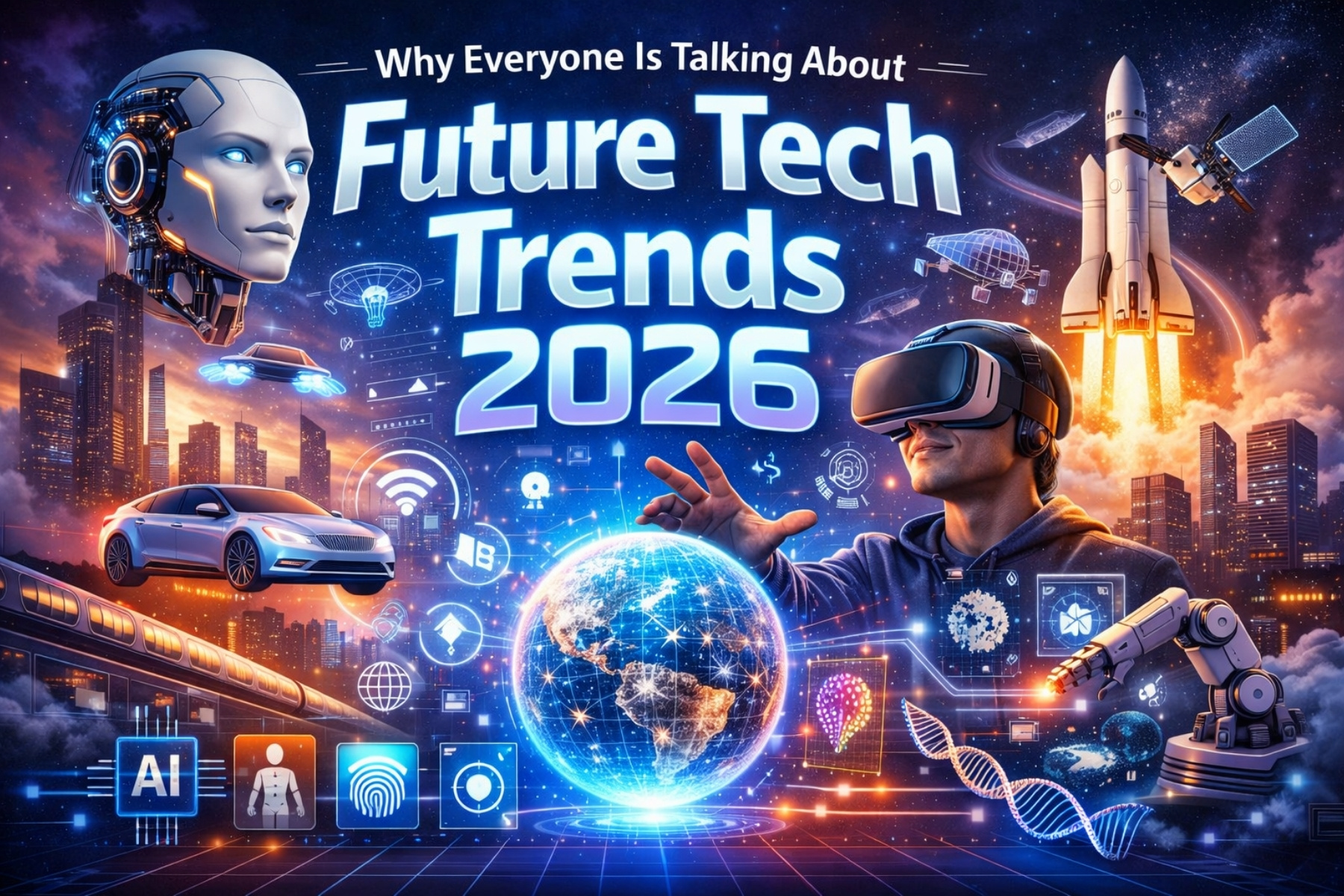
Imagine a world where:
- AI completes complex tasks without human supervision
- Virtual meetings feel more real than physical ones
- Cities manage traffic, energy, and safety automatically
- Robots assist in homes, hospitals, and offices
- Cybersecurity threats are predicted before they happen
This is not science fiction. This is the reality being built right now.
The reason Future Tech Trends 2026 are gaining global attention is simple: technology is shifting from being reactive to predictive and autonomous. Businesses that fail to adapt will struggle to survive, while those who embrace these trends early will dominate the future digital economy.
Artificial Intelligence Becomes Fully Autonomous
Artificial Intelligence is no longer limited to chatbots, recommendation engines, or automation scripts. In 2026, AI evolves into fully autonomous systems capable of independent decision-making.
What Makes AI Different in 2026?
- Autonomous AI agents that execute tasks end-to-end
- Self-learning models adapting in real time
- AI copilots integrated into operating systems
- Multi-modal AI combining text, voice, images, and video
These AI systems do not wait for instructions. They analyze data, predict outcomes, and take action making them a core part of modern digital infrastructure.
Industries Transformed by AI in 2026
- Business & Marketing: AI handles campaigns, analytics, and optimization
- Healthcare: Early disease detection and personalized treatment
- Education: AI tutors tailored to individual learning styles
- Software Development: AI-generated code and testing
Among all Future Tech Trends 2026, autonomous AI stands out as the most disruptive.
AI-Powered Personal Assistants Become Digital Employees
In 2026, personal AI assistants go far beyond reminders and voice commands. They evolve into digital employees capable of managing professional workloads.
Capabilities of AI Assistants in 2026
- Writing reports and emails
- Conducting market research
- Managing schedules and workflows
- Generating creative content
- Analyzing business performance
These assistants are context-aware, memory-enabled, and capable of long-term planning making them essential tools for professionals and businesses.
This shift significantly improves productivity while reducing operational costs.
Quantum Computing Moves Toward Commercial Reality

Quantum computing has long been considered a future technology, but 2026 marks the beginning of its commercial adoption phase.
Why Quantum Computing Matters
Traditional computers struggle with extremely complex calculations. Quantum computers use qubits, allowing them to process vast datasets exponentially faster.
Key Applications in 2026
- Drug discovery and medical research
- Climate modeling and environmental analysis
- Financial risk prediction
- Advanced cryptography
- Optimization of AI models
Although still expensive, quantum computing in 2026 becomes accessible to large enterprises through cloud-based platforms.
Extended Reality (XR) Redefines Digital Interaction
Extended Reality (XR) including Virtual Reality (VR), Augmented Reality (AR), and Mixed Reality (MR) becomes mainstream in 2026.
What’s New in XR Technology?
- Lightweight AR glasses
- Ultra-high-resolution immersive displays
- AI-powered virtual environments
- Seamless integration with cloud services
Real-World Applications
- Virtual offices and meetings
- Immersive education and training
- Healthcare simulations and therapy
- Retail virtual try-ons
- Next-generation gaming
XR plays a major role among Future Tech Trends 2026 by blurring the line between physical and digital realities.
Smart Cities Become Intelligent Ecosystems
Cities in 2026 are no longer just “connected” they are intelligent ecosystems powered by AI, IoT, and big data.
Key Smart City Innovations
- AI-based traffic management
- Smart energy distribution
- Predictive infrastructure maintenance
- Intelligent surveillance systems
- Automated public services
Benefits for Citizens
- Reduced congestion
- Lower energy consumption
- Improved public safety
- Faster emergency response
- Sustainable urban planning
Smart cities represent the future of urban living.
Web3 and Decentralized Technologies Mature
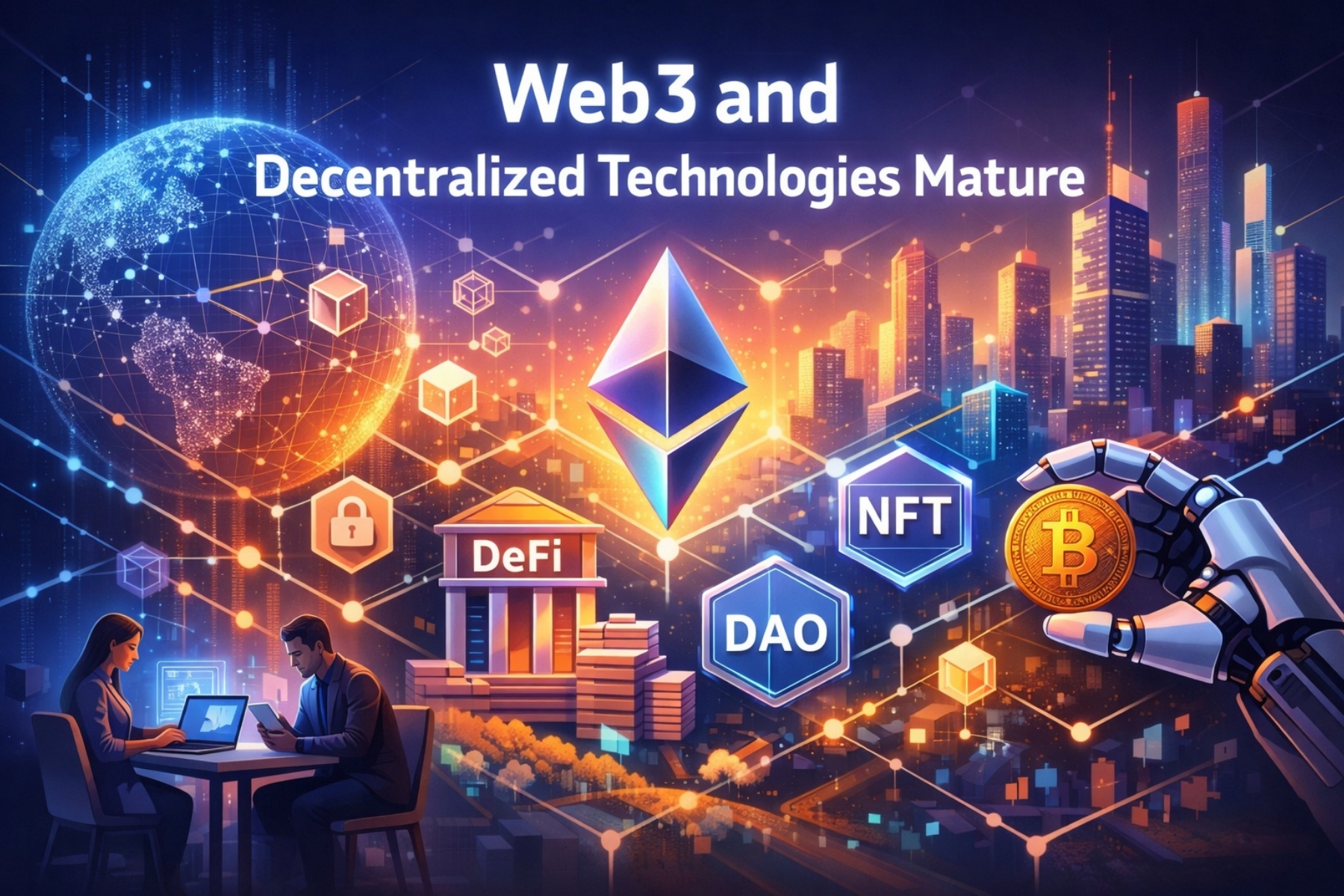
For several years, Web3 was surrounded by hype, speculation, and confusion. By 2026, it will finally enter a mature and practical phase. Instead of focusing only on cryptocurrencies, Web3 technologies now deliver real-world value.
What Changes in Web3 by 2026?
- User-owned digital identities
- Decentralized applications (dApps) with real utility
- Blockchain-based data ownership
- Transparent and trustless digital transactions
Rather than replacing the internet, Web3 enhances it by restoring user control over data and digital assets.
Industries Adopting Web3
- Finance: Decentralized finance platforms with regulatory clarity
- Healthcare: Secure patient data sharing
- Gaming: True digital asset ownership
- Content Creation: Fair monetization for creators
Among Future Tech Trends 2026, Web3 stands out as a trust-driven innovation.
Cybersecurity Becomes Predictive and AI-Driven
Future Tech Trends 2026, cyber threats grow more sophisticated. In response, cybersecurity in 2026 becomes AI-driven and predictive rather than reactive.
Key Cybersecurity Trends in 2026
- AI-based threat detection
- Real-time anomaly monitoring
- Zero-trust security architectures
- Automated incident response systems
Why Predictive Security Matters
Instead of responding after an attack occurs, AI systems now:
- Detect unusual behavior patterns
- Predict vulnerabilities
- Block threats before damage happens
This approach is essential as more critical infrastructure moves online.
Green Technology and Sustainable Innovation Rise
Sustainability becomes a top priority in 2026 as governments and corporations push for climate responsibility. Technology plays a crucial role in enabling this transition.
Major Green Tech Innovations
- AI-optimized renewable energy systems
- Smart grids for efficient power distribution
- Carbon capture technologies
- Energy-efficient data centers
- Sustainable manufacturing powered by automation
Why Green Tech Matters in 2026
Climate challenges demand immediate action. Sustainable technology reduces environmental impact while maintaining economic growth.
Green innovation is no longer optional; it is a global requirement.
The Evolution of Digital Finance
The financial world in 2026 is faster, smarter, and more inclusive. Digital finance technologies reshape how money is stored, transferred, and invested.
Key Financial Technology Trends
- AI-powered financial advisors
- Blockchain-based payment systems
- Central Bank Digital Currencies (CBDCs)
- Real-time cross-border transactions
- Smart contract automation
Impact on Global Economy
Digital finance reduces costs, increases transparency, and expands access to financial services worldwide.
This transformation strengthens the role of technology in global economic stability.
The Future of Work in 2026
Work in 2026 looks very different from the traditional office-based model. Technology enables flexibility, automation, and global collaboration.
How Work Is Changing
- AI-powered workflow automation
- Virtual and hybrid workplaces
- Skill-based hiring powered by AI
- Continuous learning through digital platforms
Skills That Matter Most
- AI literacy
- Data analysis
- Creativity and critical thinking
- Cybersecurity awareness
The future workforce must adapt quickly to stay relevant.
Robotics and Automation Dominate Industries
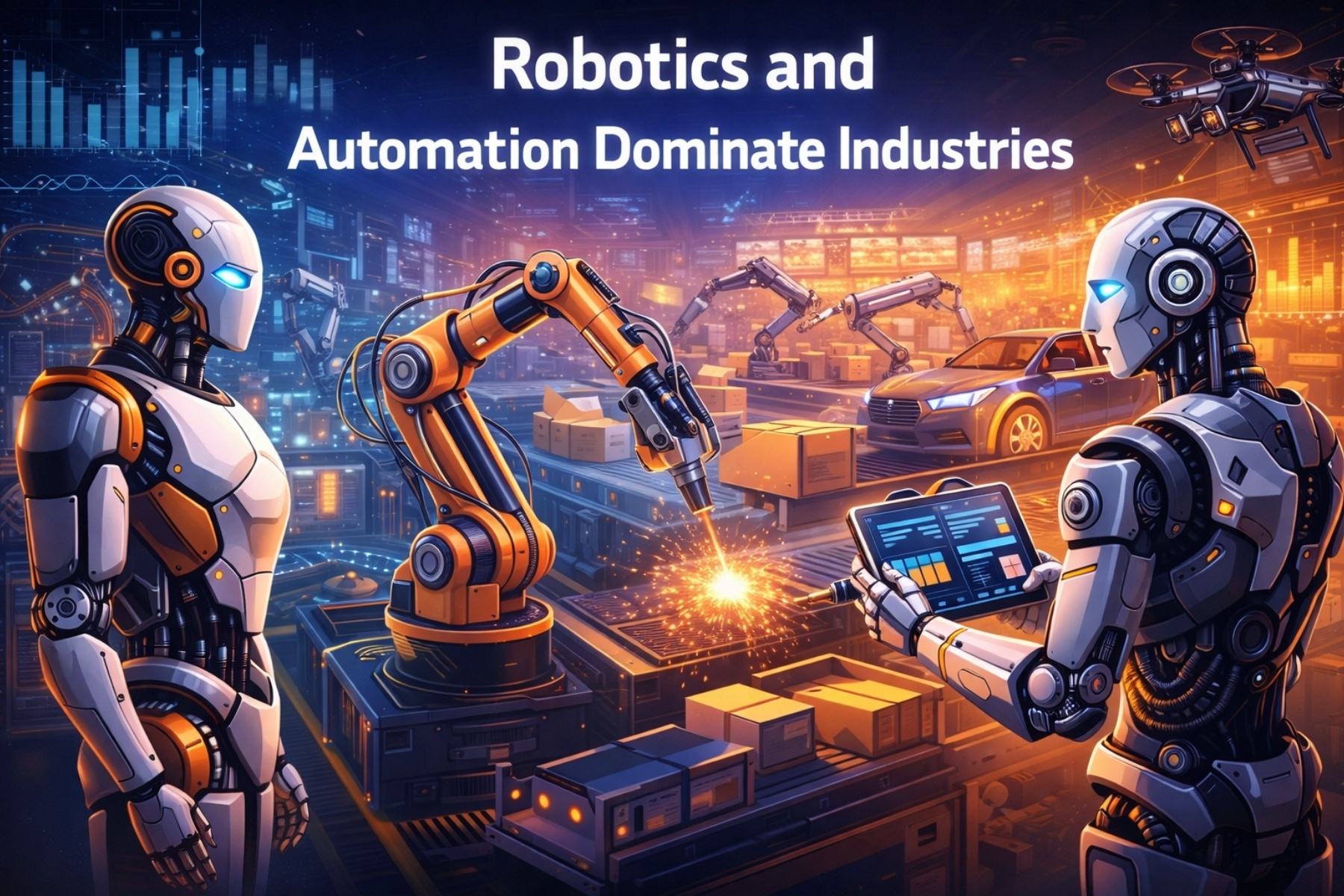
By 2026, robotics is no longer confined to factories. Advanced robotics combined with AI are entering daily life, healthcare, logistics, and service industries.
Key Robotics Trends
- Collaborative robots (cobots): Work alongside humans safely
- Autonomous delivery robots: Packages delivered without human intervention
- AI-powered warehouse automation: Faster and more efficient logistics
- Service robots: Hotels, restaurants, and offices
- Human-like humanoid robots: Capable of assisting elderly and disabled people
Impact on Industries
- Manufacturing: Reduced costs, increased efficiency
- Logistics: Faster, more reliable delivery
- Healthcare: Surgical assistance, elder care
- Daily Life: Household assistance, smart appliances
Among Future Tech Trends 2026, robotics represents a tangible shift in both productivity and human convenience.
Healthcare Technology Breakthroughs
Healthcare in 2026 is heavily driven by AI, wearable devices, and personalized medicine. The focus shifts from reactive treatment to predictive, preventive, and precise care.
Notable Innovations
- AI diagnostics that detect diseases early
- Telemedicine with real-time remote monitoring
- Wearables tracking vital signs continuously
- Personalized treatment plans based on genetic data
- Robotics-assisted surgeries with extreme precision
Why This Matters
Better healthcare improves life expectancy and reduces costs. It also empowers patients with more control over their health.
Healthcare technology stands as a major pillar of Future Tech Trends 2026, bridging the gap between human needs and machine intelligence.
Biotechnology and Human Enhancement
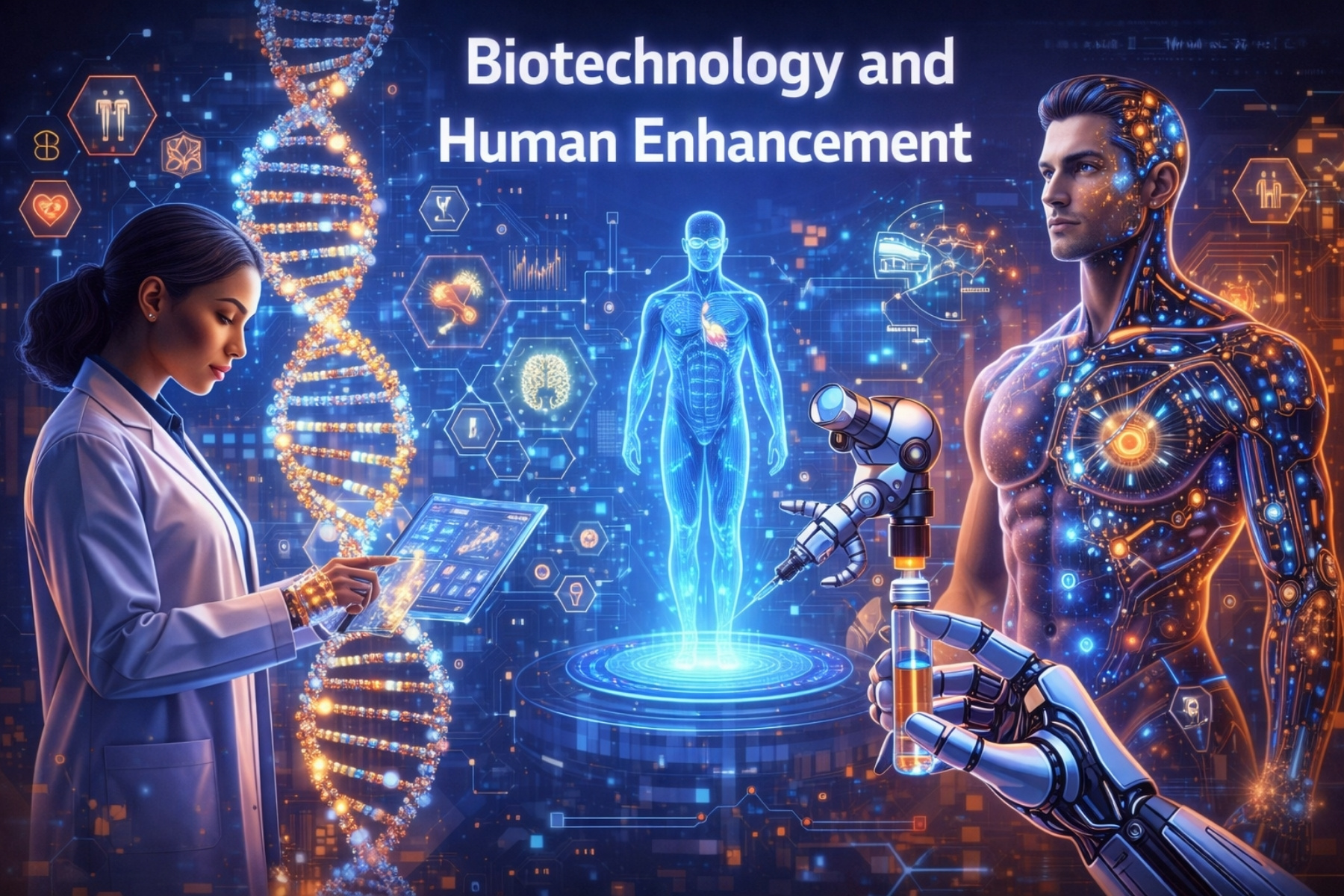
Biotech in 2026 goes beyond traditional medicine. Human enhancement and genetic technologies are transforming how we prevent and treat diseases.
Key Biotech Innovations
- CRISPR-based gene editing
- Regenerative medicine and organ replacement
- Anti-aging research and therapies
- Bio-printed tissues and organs
- Neural interfaces for brain-computer interaction
Applications
- Treating genetic disorders
- Enhancing physical and cognitive abilities
- Personalized therapies based on DNA
- Brain-computer interfaces for direct communication with devices
These advancements raise both ethical considerations and unprecedented opportunities.
Next-Generation Connectivity (6G and Beyond)
While 5G is still rolling out globally, 2026 brings 6G networks and ultra-fast connectivity, enabling innovations that were impossible before.
What 6G Offers
- Speeds up to 100x faster than 5G
- Near-zero latency for real-time applications
- Massive device connectivity (IoT and smart cities)
- AI-assisted network optimization
Impact on Technology
- Real-time virtual reality experiences
- Autonomous vehicles communicating instantly
- Enhanced IoT ecosystems for smart homes and cities
- AI-driven infrastructure monitoring
Next-generation connectivity is the backbone of all other Future Tech Trends 2026.
Space Technology and Exploration
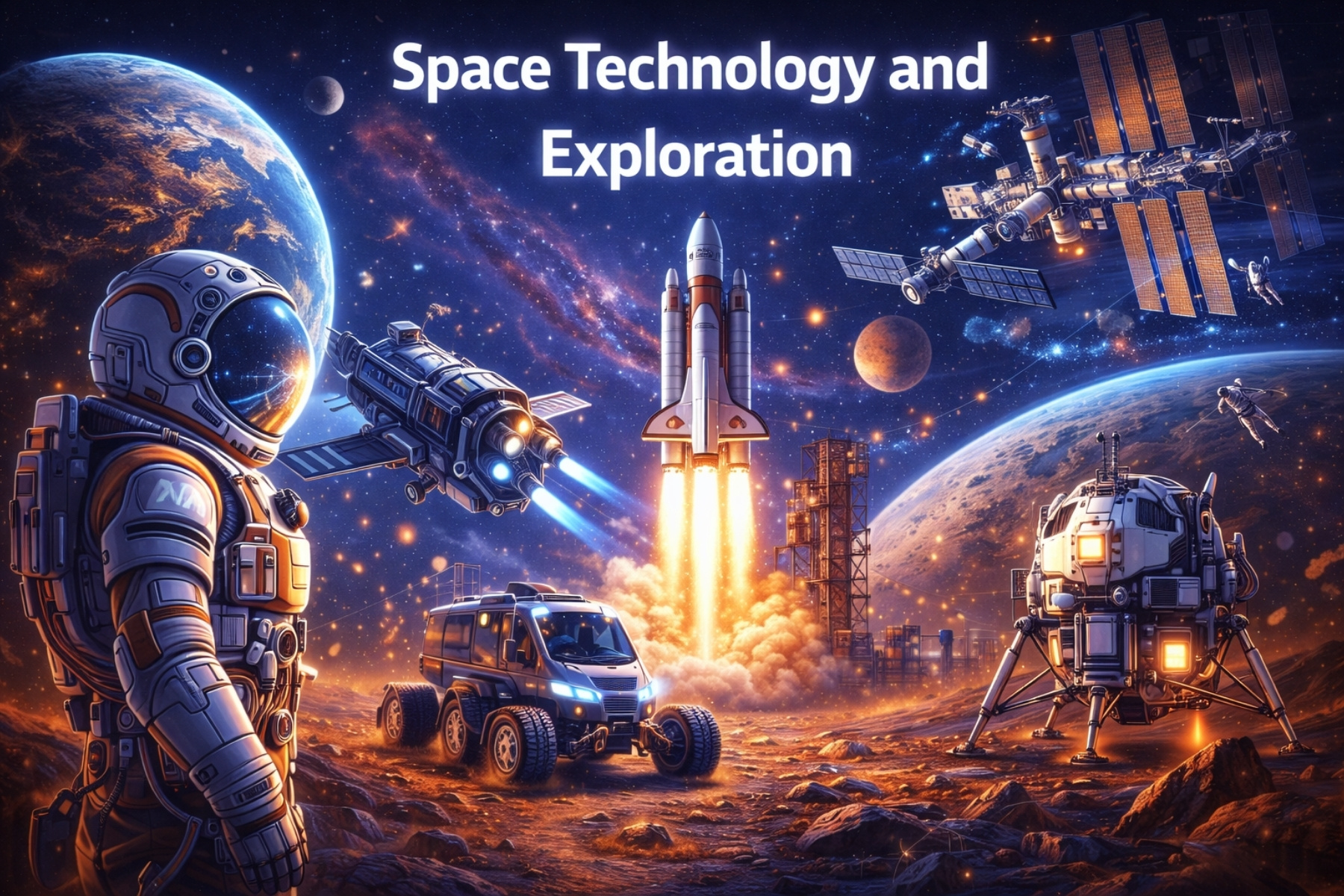
Space exploration is no longer limited to government agencies. By 2026, commercial space tech and satellite innovation are reshaping the sector.
Key Space Tech Trends
- Private companies launching satellites and spacecraft
- Space tourism gaining traction
- AI-assisted satellite data analytics
- Interplanetary research missions
- Space-based internet and communication
Why It Matters
Space tech drives global innovation, fuels scientific discovery, and inspires the next generation of engineers and scientists.
AI Ethics and Regulation
As AI becomes autonomous in 2026, ethical considerations and regulations become critical. Technology evolves faster than law, creating challenges for governments, companies, and society.
Key AI Ethics Trends
- Transparent AI decision-making
- Bias detection and mitigation in AI models
- Privacy-preserving data handling
- Legal frameworks for AI accountability
- Global AI policy coordination
Why Ethics Matter
Without proper regulation, AI misuse can lead to privacy breaches, discrimination, and uncontrolled autonomous decisions. Ethical AI ensures that Future Tech Trends 2026 benefit humanity while minimizing risks.
Future of Transportation
Transportation in 2026 is transforming with autonomous vehicles, hyperloop systems, and smart logistics networks.
Notable Innovations
- Self-driving cars and trucks
- Electric and hydrogen-powered vehicles
- Hyperloop and ultra-fast public transport
- AI-driven traffic management
- Drone-based delivery systems
Impact
- Reduced accidents
- Faster and more efficient transport
- Lower carbon emissions
- Global supply chain optimization
Transportation is a crucial area where technology directly improves daily life.
Environmental Technology and Sustainability
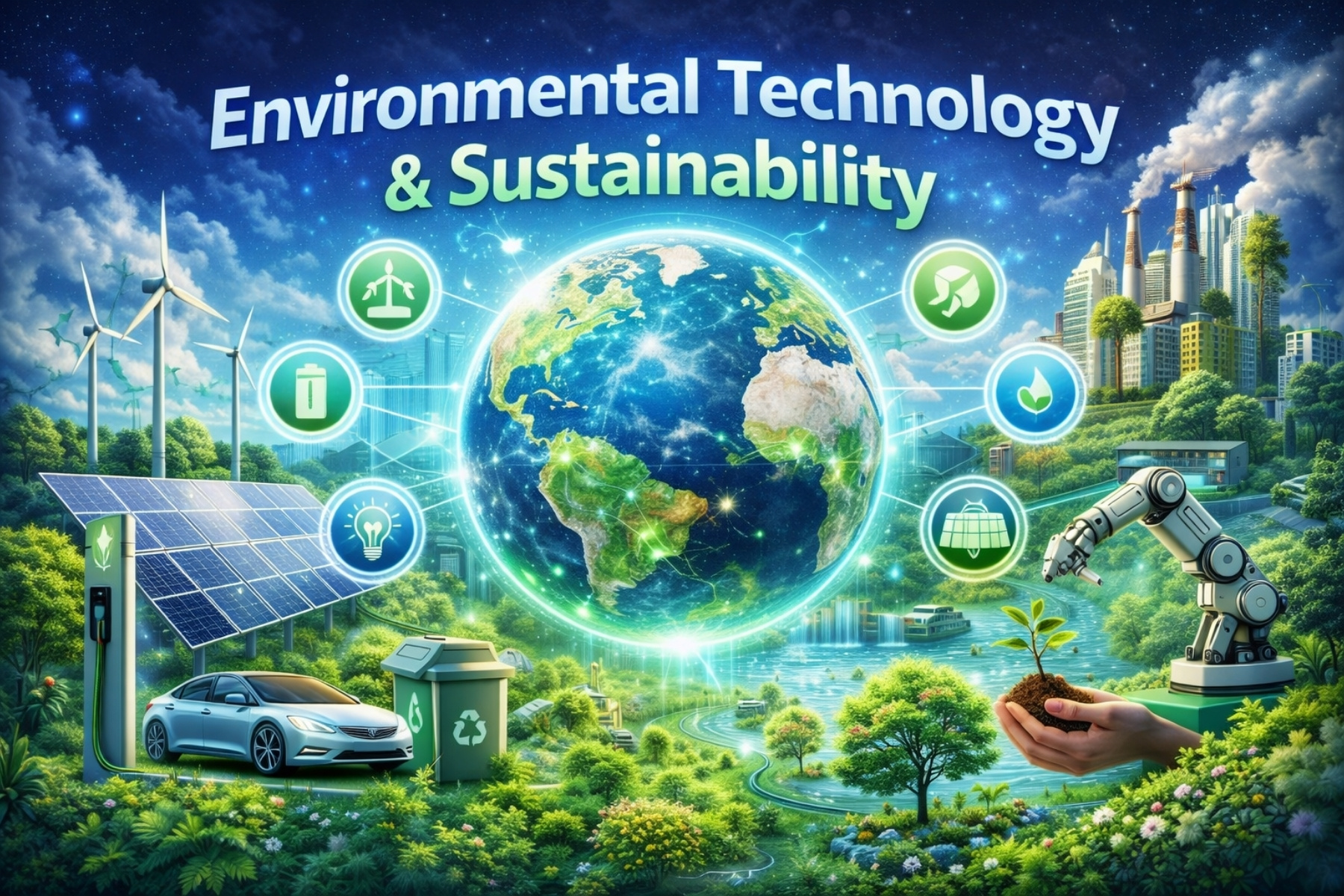
Sustainability is no longer optional in 2026. Environmental technologies focus on reducing carbon footprints, preserving ecosystems, and optimizing energy use.
Major Innovations
- Smart energy grids and AI energy optimization
- Carbon capture and storage technologies
- Sustainable agriculture with AI and robotics
- Waste reduction and circular economy systems
- Renewable energy solutions for urban and rural areas
Why It Matters
Sustainable tech is essential for combating climate change and supporting the growth of future smart cities. It is a core part of Future Tech Trends 2026.
Frequently Asked Questions
1. What are the top Future Tech Trends 2026?
The top Future Tech Trends 2026 include autonomous AI, quantum computing, extended reality (XR), robotics, Web3 and decentralized applications, predictive cybersecurity, green technology, digital finance, next-generation connectivity (6G), and space technology innovations.
2. How will AI impact industries in 2026?
By 2026, AI will transform industries through autonomous decision-making, predictive analytics, workflow automation, and AI assistants acting as digital employees, boosting efficiency across healthcare, finance, education, and manufacturing.
3. What is the role of quantum computing in 2026?
Quantum computing in 2026 will enable faster and more complex calculations than traditional computers, impacting drug discovery, climate modeling, AI optimization, financial risk assessment, and cybersecurity.
4. How will XR (Extended Reality) change digital experiences in 2026?
XR technologies VR, AR, and MR will create immersive environments for virtual offices, education, healthcare, retail, and entertainment, making digital interaction more realistic and human-centric.
5. What are the major advancements in robotics by 2026?
Robotics in 2026 will include collaborative robots (cobots), autonomous delivery systems, AI-powered warehouse automation, humanoid robots, and service robots for homes, hospitals, and offices.
6. How will Web3 and decentralized technologies evolve in 2026?
Web3 in 2026 will focus on user-owned digital identities, decentralized apps (dApps), blockchain-based data control, and transparent transactions, enhancing trust, security, and digital asset ownership.
7. What cybersecurity trends will dominate 2026?
Predictive, AI-driven cybersecurity will dominate 2026, featuring real-time threat detection, automated incident response, anomaly monitoring, and zero-trust architectures to prevent cyberattacks.
8. How will green and sustainable technology develop by 2026?
Green technology in 2026 will include AI-optimized renewable energy systems, smart grids, carbon capture, energy-efficient data centers, and sustainable manufacturing, helping reduce carbon footprints and environmental impact.
9. How will digital finance change in 2026?
Digital finance will evolve through AI-powered financial advisors, blockchain-based payments, Central Bank Digital Currencies (CBDCs), real-time global transactions, and smart contract automation, creating faster and more secure financial systems.
10. How will Future Tech Trends 2026 impact daily life?
People will experience smarter cities, AI-driven workplaces, personalized healthcare, immersive XR experiences, sustainable energy systems, autonomous transport, and enhanced digital security, making life more efficient, convenient, and connected.
Conclusion
The Future Tech Trends 2026 mark a pivotal shift in the digital world. Technologies like autonomous AI, quantum computing, XR, robotics, Web3, green energy, and next-generation connectivity are no longer experimental; they are shaping industries, economies, and everyday life.
Adopting these innovations is essential for businesses, governments, and individuals who wish to remain competitive and relevant. Moreover, ethical frameworks, sustainable development, and AI governance ensure that these technologies benefit humanity as a whole.
In summary, 2026 is the year where technology becomes truly transformative, human-centric, and globally influential. Staying informed and adapting early to these trends will define the leaders of tomorrow.
Explore More: Future Tech Trends 2026: Top Technologies That Will Shape the Future