Search engine optimization has entered a new phase where artificial intelligence is no longer optional. Businesses, bloggers, and digital marketers are now competing in an environment where speed, data accuracy, and content relevance determine success. In this evolving landscape, tools that combine automation with strategic insights are becoming essential.
One of the most talked-about platforms in this space is the Semrush Toolkit. Known for its advanced data capabilities and intelligent recommendations, it is designed to help users streamline SEO workflows, improve rankings, and create high-performing content.
This article provides a complete, in-depth review of the Semrush Toolkit in 2026. It explores its features, benefits, real-world applications, pricing, advantages, and limitations. Whether you are a beginner or an experienced marketer, this guide will help you understand whether this tool is worth your investment.
Why Most SEO Strategies Fail in 2026
Many websites fail to rank not because they lack content, but because they lack strategy. Publishing articles without understanding search intent, keyword difficulty, and content structure leads to poor performance.
Traditional SEO methods are no longer enough. Manual keyword research, guesswork-based content writing, and outdated optimization practices slow down growth. At the same time, competitors are using AI-powered tools to analyze search trends, optimize content in real time, and build smarter strategies.
This is where the Semrush Toolkit becomes relevant. It does not just provide data. It transforms data into actionable insights, helping users make better decisions faster.
What is Semrush Toolkit
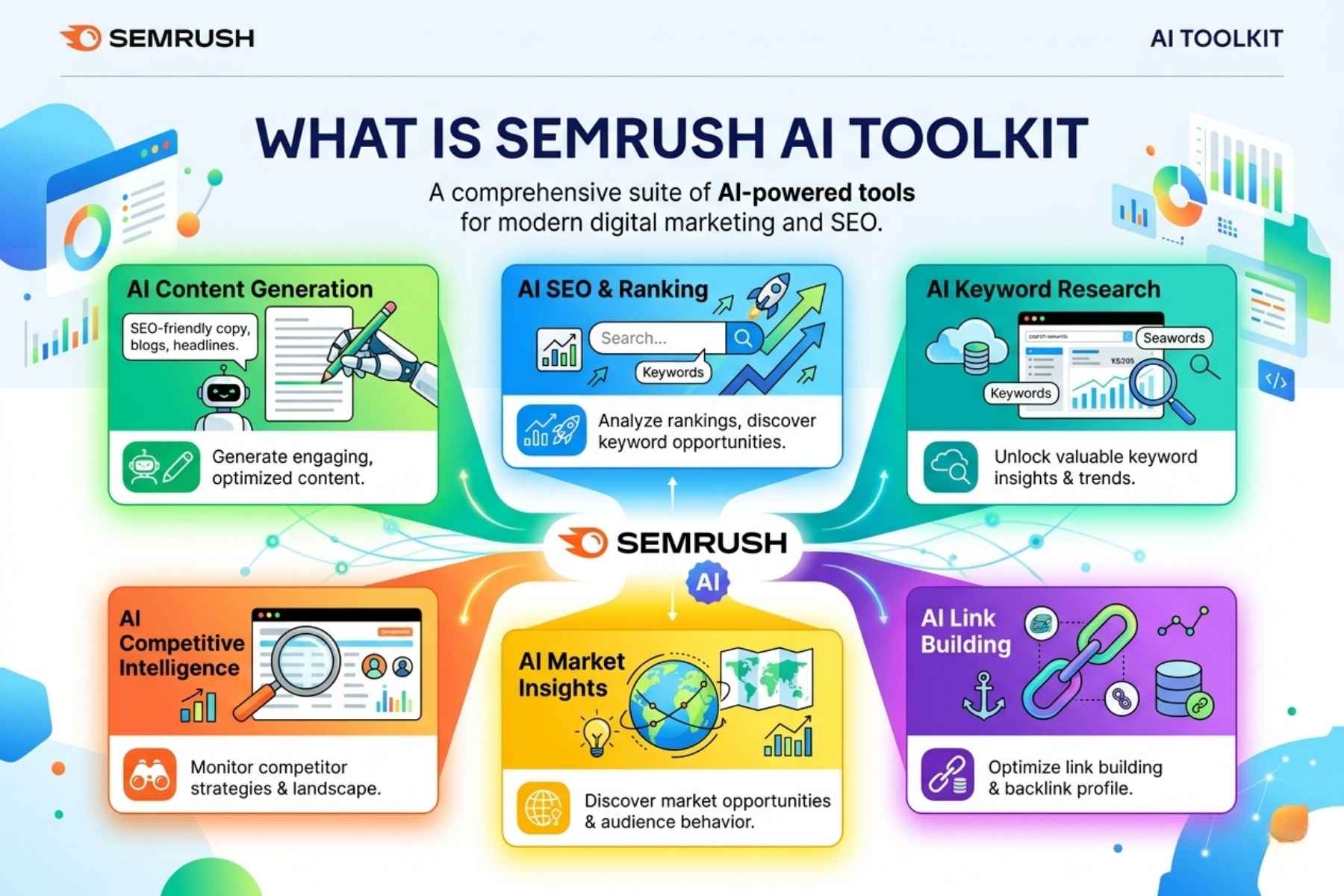
Semrush Toolkit is an advanced SEO solution that integrates artificial intelligence into the core functions of digital marketing. It is built on top of the broader Semrush platform, which is already known for its capabilities in keyword research, competitor analysis, backlink tracking, and site auditing.
The AI Toolkit enhances these capabilities by introducing automation, predictive analysis, and intelligent content recommendations. Instead of manually analyzing hundreds of data points, users receive clear suggestions that are easy to implement.
At its core, the tool focuses on three main areas:
- Keyword research and search intent analysis
- Content optimization and topic discovery
- Competitive intelligence and ranking strategy
By combining these elements, the platform allows users to create SEO strategies that are both efficient and effective.
Why Semrush Toolkit is Trending in 2026
The rise of AI-driven search experiences has changed how content is created and ranked. Search engines are becoming smarter, and they now prioritize relevance, depth, and user satisfaction more than ever before.
There are several reasons why the Semrush Toolkit is gaining popularity in 2026.
1. AI-Driven Insights Instead of Raw Data
Most SEO tools provide large amounts of data, but interpreting that data requires experience. The AI Toolkit simplifies this process by offering clear recommendations based on patterns and trends.
2. Faster Content Creation Workflow
Content teams can now move from keyword research to publishing much faster. The tool suggests topics, outlines, and optimization improvements in a streamlined workflow.
3. Improved Accuracy in Keyword Targeting
Understanding search intent is critical. The AI system categorizes keywords based on intent, helping users target the right audience with the right content.
4. Competitive Advantage
With real-time analysis of competitor strategies, users can identify gaps and opportunities that would otherwise be missed.
Core Features of Semrush Toolkit
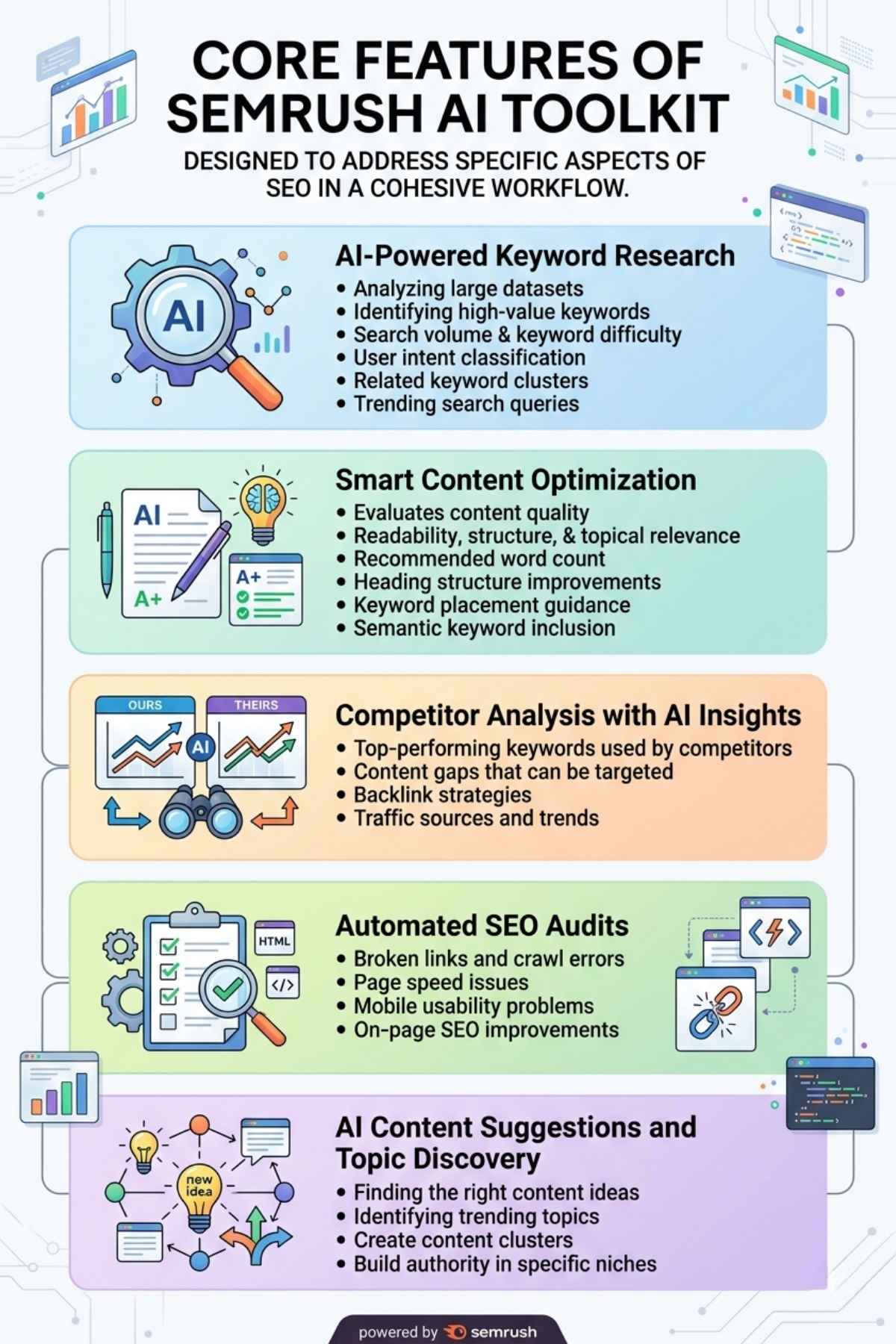
The strength of the platform lies in its features. Each feature is designed to address a specific aspect of SEO while maintaining a cohesive workflow.
AI-Powered Keyword Research
Keyword research is the foundation of any SEO strategy. The Semrush Toolkit enhances this process by analyzing large datasets and identifying high-value keywords.
Instead of simply listing keywords, the tool provides insights such as:
- Search volume and keyword difficulty
- User intent classification
- Related keyword clusters
- Trending search queries
This allows users to build content strategies that align with real search behavior.
Smart Content Optimization
Creating content that ranks requires more than just including keywords. The AI Toolkit evaluates content quality based on multiple factors, including readability, structure, and topical relevance.
It provides suggestions such as:
- Recommended word count
- Heading structure improvements
- Keyword placement guidance
- Semantic keyword inclusion
These recommendations help ensure that content is optimized for both users and search engines.
Competitor Analysis with AI Insights
Understanding competitors is essential for ranking higher. The tool analyzes competitor websites and identifies their strengths and weaknesses.
Users can discover:
- Top-performing keywords used by competitors
- Content gaps that can be targeted
- Backlink strategies
- Traffic sources and trends
This information helps create strategies that outperform competitors rather than simply copying them.
Automated SEO Audits
Technical SEO plays a major role in rankings. The AI Toolkit performs comprehensive site audits and highlights issues that need attention.
Common audit insights include:
- Broken links and crawl errors
- Page speed issues
- Mobile usability problems
- On-page SEO improvements
By fixing these issues, users can improve site performance and user experience.
AI Content Suggestions and Topic Discovery
Finding the right content ideas can be challenging. The tool uses AI to generate topic suggestions based on industry trends and user queries.
This feature helps users:
- Identify trending topics
- Create content clusters
- Build authority in specific niches
As a result, websites can establish themselves as reliable sources of information.
How Semrush Toolkit Improves Google Rankings
Ranking on Google requires a combination of factors. The Semrush Toolkit supports each of these factors through its integrated approach.
Better Keyword Targeting
By identifying keywords with the right balance of search volume and competition, the tool helps users target opportunities that are easier to rank for.
Enhanced Content Quality
Search engines prioritize content that provides value. The optimization features ensure that content meets quality standards and aligns with user intent.
Stronger Technical SEO
Fixing technical issues improves crawlability and indexing, which are essential for ranking.
Data-Driven Decision Making
Instead of relying on assumptions, users can base their strategies on real data and AI-driven insights.
Who Should Use Semrush Toolkit
The tool is versatile and can be used by different types of users.
Bloggers and Content Creators
It helps in finding content ideas, optimizing articles, and improving visibility.
Digital Marketing Agencies
Agencies can manage multiple clients, analyze competitors, and deliver better results.
E-commerce Businesses
Product pages and category pages can be optimized for higher search rankings.
SEO Professionals
Advanced users can leverage detailed insights to refine their strategies.
How to Use Semrush Toolkit Step by Step
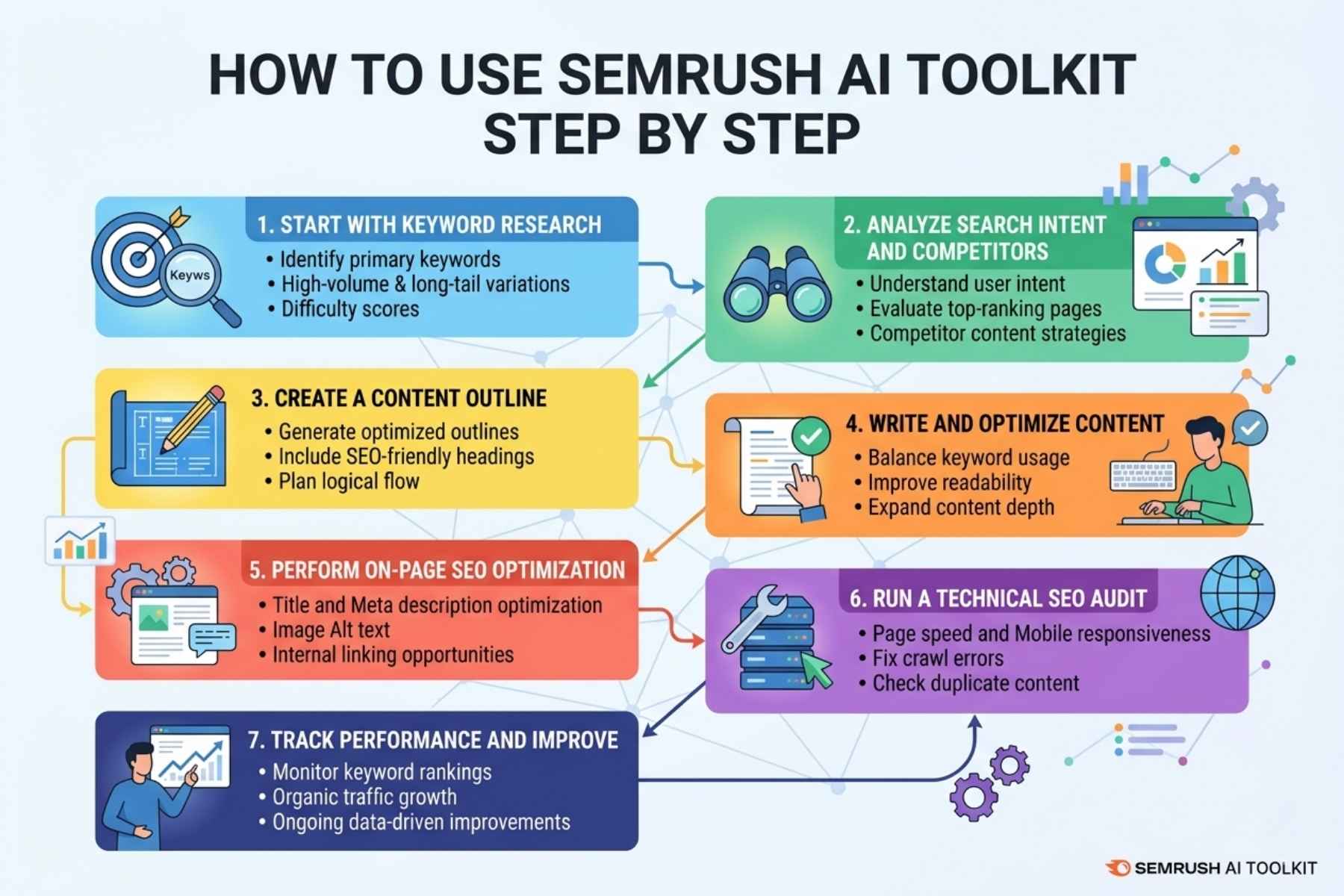
Understanding features is important, but applying them correctly is what drives results. The Semrush Toolkit is designed to simplify complex SEO processes into a structured workflow. Below is a practical step-by-step guide that reflects how professionals actually use it.
Step 1: Start with Keyword Research
Every successful SEO campaign begins with identifying the right keywords. Inside the platform, users enter a primary keyword related to their niche.
The system then generates:
- High-volume keywords
- Long-tail keyword variations
- Keyword clusters grouped by intent
- Difficulty scores and ranking potential
Instead of selecting keywords randomly, the goal is to choose terms that match user intent and have realistic ranking opportunities.
Step 2: Analyze Search Intent and Competitors
Once keywords are selected, the next step is understanding what type of content Google prefers for those queries.
The tool evaluates top-ranking pages and provides insights such as:
- Content format being used
- Average content length
- Key topics covered by competitors
- Common headings and structure patterns
This ensures that your content aligns with what is already working in search results.
Step 3: Create a Content Outline
Before writing, a structured outline is essential. The Semrush Toolkit generates optimized outlines based on data collected from top-ranking pages.
A strong outline typically includes:
- SEO-friendly headings
- Logical content flow
- Coverage of essential subtopics
- Keyword placement strategy
This reduces guesswork and ensures that no important section is missed.
Step 4: Write and Optimize Content
After creating the outline, content writing begins. During this phase, the AI system continuously evaluates the content and provides recommendations.
These include:
- Keyword usage balance
- Readability improvements
- Content depth suggestions
- Semantic keyword inclusion
The goal is not to overload content with keywords, but to maintain natural readability while covering the topic thoroughly.
Step 5: Perform On-Page SEO Optimization
Once the content is complete, the tool analyzes the page for on-page SEO factors.
Key elements reviewed include:
- Title tag optimization
- Meta description quality
- Internal linking opportunities
- Image alt text recommendations
Optimizing these elements increases the chances of higher visibility in search results.
Step 6: Run a Technical SEO Audit
Before publishing, it is important to ensure that the website is technically sound. The audit feature identifies issues that may affect rankings.
Typical checks include:
- Page speed performance
- Mobile responsiveness
- Crawl errors
- Duplicate content issues
Fixing these problems ensures that search engines can properly index and rank your content.
Step 7: Track Performance and Improve
SEO is not a one-time process. After publishing, the tool tracks rankings and provides ongoing insights.
Users can monitor:
- Keyword position changes
- Organic traffic growth
- User engagement metrics
- Competitor performance shifts
Based on this data, further improvements can be made to maintain or improve rankings.
Real-World Use Cases
The true value of the Semrush Toolkit becomes clear when applied in real scenarios. Below are some practical use cases.
Blog Growth Strategy
A blogger can use the tool to identify low-competition keywords and create high-quality content around them. Over time, this builds authority and increases organic traffic.
Affiliate Marketing
Affiliate marketers can find buyer-intent keywords and optimize product-focused content. This increases conversion rates and revenue.
Local SEO Optimization
Businesses targeting local audiences can identify location-based keywords and optimize their content accordingly.
Content Scaling for Agencies
Agencies handling multiple clients can automate research and optimization processes, allowing them to scale operations without compromising quality.
Example Workflow for Ranking a Blog Post
To better understand how everything connects, here is a simplified workflow that many professionals follow.
- Identify a primary keyword with moderate competition
- Generate related keyword clusters
- Analyze top 10 search results
- Create a detailed content outline
- Write high-quality, informative content
- Optimize on-page SEO elements
- Fix technical issues
- Publish and track performance
- Update content based on data insights
This structured approach significantly increases the chances of ranking on Google.
Advanced Features of Semrush Toolkit
Beyond basic functionality, the platform includes advanced features that provide deeper insights and automation.
Predictive SEO Analysis
The AI system predicts which keywords are likely to gain traction based on historical data and trends. This allows users to target opportunities before they become highly competitive.
Content Gap Analysis
This feature identifies topics that competitors are ranking for but your website is not covering.
By filling these gaps, users can attract additional traffic and improve overall site authority.
Backlink Strategy Insights
Backlinks remain a critical ranking factor. The tool analyzes competitor backlink profiles and suggests opportunities for building high-quality links.
This helps improve domain authority and search visibility.
AI Writing Assistance
While not a full replacement for human writing, the AI assistant helps generate ideas, improve clarity, and enhance structure.
It is particularly useful for overcoming writer’s block and speeding up content creation.
SERP Feature Tracking
The tool monitors special search result features such as:
- Featured snippets
- People also ask sections
- Knowledge panels
Optimizing for these features can significantly increase visibility and click-through rates.
Content Optimization Strategy Using Semrush Toolkit
To maximize results, it is important to follow a strategic approach rather than relying solely on automation.
Focus on User Intent
Every piece of content should answer a specific question or solve a problem. The tool helps identify intent, but the execution depends on the writer.
Create In-Depth Content
Short and shallow content rarely ranks in competitive niches. Aim for comprehensive coverage of topics.
Maintain Natural Keyword Usage
Keyword stuffing can harm rankings. The Semrush Toolkit provides guidance to maintain a balanced approach.
Update Content Regularly
Search trends change over time. Updating content ensures that it remains relevant and competitive.
Common Mistakes to Avoid
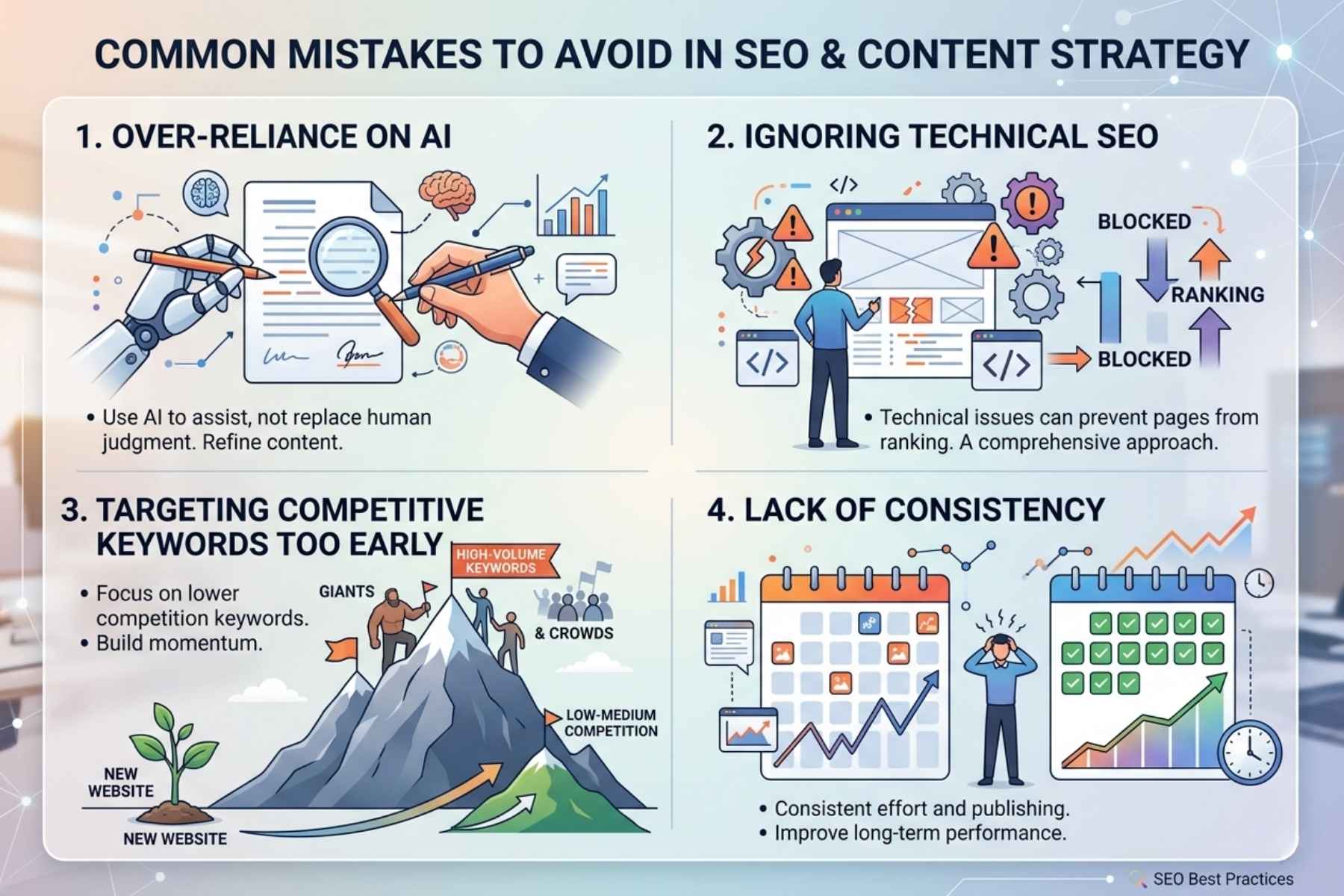
Even with advanced tools, mistakes can limit results.
Over-Reliance on AI
AI should assist, not replace human judgment. Content should always be reviewed and refined.
Ignoring Technical SEO
Content alone is not enough. Technical issues can prevent pages from ranking.
Targeting Highly Competitive Keywords Too Early
New websites should focus on low to medium competition keywords before targeting highly competitive ones.
Lack of Consistency
SEO requires consistent effort. Publishing content regularly improves long-term performance.
Performance Impact and Results
When used correctly, the Semrush Toolkit can lead to measurable improvements.
Users often experience:
- Increased organic traffic
- Higher keyword rankings
- Better content engagement
- Improved conversion rates
However, results depend on strategy, execution, and consistency.
Pricing Plans and Value for Money

One of the most important factors when choosing an SEO tool is pricing. The Semrush Toolkit is part of the broader Semrush ecosystem, which offers multiple subscription plans based on user needs.
While exact pricing may vary depending on updates and regional offers, the platform generally provides three main tiers.
Pro Plan
This plan is designed for beginners, freelancers, and small website owners. It includes access to essential features such as keyword research, site audits, and limited AI capabilities.
It is suitable for users who are starting their SEO journey and need a reliable tool without a high investment.
Guru Plan
The Guru plan is ideal for growing businesses and professional marketers. It offers expanded limits, deeper data insights, and more advanced content optimization tools.
This plan is often recommended for users who are actively publishing content and managing multiple projects.
Business Plan
This is the most advanced plan, created for agencies and large-scale operations. It includes full access to all features, higher usage limits, and detailed analytics.
It is best suited for teams that require comprehensive SEO solutions and manage multiple clients.
Is It Worth the Price
The Semrush Toolkit may seem expensive compared to basic SEO tools, but its value lies in the depth of data and automation it provides.
When evaluating cost, it is important to consider:
- Time saved through automation
- Improved accuracy in keyword targeting
- Better content performance
- Increased traffic and revenue potential
For serious marketers, the return on investment can be significant if the tool is used effectively.
Pros of Semrush Toolkit
Understanding the strengths of the platform helps determine its suitability for different users.
Comprehensive All-in-One Solution
The tool covers every major aspect of SEO, including keyword research, content optimization, competitor analysis, and technical audits. This eliminates the need for multiple tools.
AI-Driven Insights
Instead of presenting raw data, the system provides actionable recommendations. This makes it easier for users to make informed decisions.
User-Friendly Interface
Despite its advanced capabilities, the platform is designed to be accessible. Even beginners can navigate its features with minimal learning time.
Accurate and Reliable Data
The tool is known for its large database and accurate metrics. This ensures that strategies are based on reliable information.
Scalable for Growth
Whether you are managing a single website or multiple clients, the platform can scale according to your needs.
Cons of Semrush Toolkit
No tool is perfect, and it is important to consider the limitations as well.
Higher Cost Compared to Basic Tools
For beginners with limited budgets, the pricing may be a challenge.
Learning Curve for Advanced Features
While basic functions are easy to use, some advanced features require time and experience to fully understand.
Dependence on Data Interpretation
Although the AI provides recommendations, users still need to apply strategic thinking for best results.
Limited AI Writing Capabilities
The AI assistance is helpful, but it does not replace human creativity and expertise in content writing.
Semrush Toolkit vs Competitors
To fully evaluate the platform, it is important to compare it with other popular SEO tools.
Semrush Toolkit vs Ahrefs
Ahrefs is well-known for its backlink analysis and keyword research capabilities.
- Semrush Toolkit offers more comprehensive features, including content optimization and AI-driven insights
- Ahrefs excels in backlink data and simplicity
For users looking for an all-in-one solution, Semrush has an advantage. For backlink-focused strategies, Ahrefs remains strong.
Semrush Toolkit vs Surfer SEO
Surfer SEO specializes in content optimization.
- Semrush Toolkit provides a broader range of features beyond content optimization
- Surfer SEO offers highly detailed content scoring and optimization suggestions
If your focus is purely on content, Surfer SEO is a strong option. For complete SEO management, Semrush is more versatile.
Semrush Toolkit vs Frase
Frase is known for content briefs and AI-generated outlines.
- Semrush Toolkit includes similar features but adds keyword research, audits, and competitor analysis
- Frase is more focused on content creation
Semrush is better suited for full SEO strategies, while Frase is ideal for content planning.
Semrush Toolkit vs Free SEO Tools
Many free tools provide basic keyword research and analysis.
- Semrush Toolkit offers deeper insights and advanced features
- Free tools are limited in data accuracy and functionality
For long-term growth and competitive niches, paid tools provide a significant advantage.
Who Should Invest in Semrush Toolkit
The tool is not necessary for everyone. It is best suited for users who are serious about SEO and want consistent results.
Best for
- Professional bloggers
- SEO specialists
- Digital marketing agencies
- E-commerce businesses
- Content teams
Not Ideal for
- Casual users with no long-term SEO goals
- Individuals looking for completely free solutions
- Users who are not willing to invest time in learning SEO
Return on Investment Analysis
Investing in SEO tools should always be evaluated based on potential returns.
With proper usage, the Semrush Toolkit can help:
- Increase organic traffic
- Improve conversion rates
- Reduce content creation time
- Identify profitable keywords
Over time, these benefits can outweigh the initial cost.
Common User Feedback and Experience
Most users appreciate the platform for its depth and reliability. Positive feedback often highlights:
- Ease of use
- Accuracy of data
- Comprehensive feature set
However, some users mention that the cost and complexity of advanced features can be challenging at first.
Strategic Advantage in 2026 SEO

SEO in 2026 is highly competitive, and success depends on efficiency and precision.
The Semrush Toolkit provides a strategic advantage by:
- Automating repetitive tasks
- Delivering actionable insights
- Enabling data-driven decision making
This allows users to focus more on strategy and less on manual work.
Expert SEO Strategies Using Semrush Toolkit
Having access to a powerful tool is not enough. The real difference comes from how effectively it is used. Below are advanced strategies that professionals use to achieve consistent rankings.
Build Topic Authority Instead of Single Articles
Many beginners focus on ranking a single post, but search engines now prioritize websites that demonstrate expertise across a topic.
Using the Semrush Toolkit, you can:
- Identify keyword clusters
- Create multiple articles around one topic
- Interlink related content
This approach builds topical authority and increases overall rankings.
Target Low-Competition Keywords First
Instead of competing with high-authority websites, start with keywords that have lower competition.
The tool helps identify these opportunities by analyzing keyword difficulty and search trends. Ranking for smaller keywords creates a foundation for targeting more competitive terms later.
Use Content Gap Analysis Strategically
One of the most powerful features is content gap analysis.
Professionals use it to:
- Discover missing topics on their website
- Identify competitor weaknesses
- Create content that fills those gaps
This method often leads to faster ranking improvements.
Optimize for Search Intent, Not Just Keywords
Modern SEO is focused on understanding what users are actually looking for.
The Semrush Toolkit categorizes keywords based on intent, such as informational, navigational, or transactional. Creating content that matches intent improves engagement and ranking potential.
Update and Refresh Existing Content
Publishing new content is important, but updating old content can deliver faster results.
Using performance tracking, you can identify pages that are close to ranking higher and improve them by:
- Adding updated information
- Improving structure
- Enhancing keyword coverage
Leverage Internal Linking
Internal links help search engines understand your website structure.
With the help of the tool, you can:
- Connect related articles
- Distribute authority across pages
- Improve user navigation
This small optimization can have a significant impact on rankings.
Monitor Competitors Continuously
SEO is not static. Competitors are always improving their strategies.
The Semrush Toolkit allows you to track changes in competitor rankings, keywords, and content strategies. This helps you stay ahead rather than reacting too late.
Advanced Content Strategy Framework
To maximize results, professionals often follow a structured framework.
Step 1: Research and Planning
Identify keyword clusters and analyze competitors.
Step 2: Content Creation
Develop high-quality, in-depth content based on data insights.
Step 3: Optimization
Use AI recommendations to refine structure and keyword usage.
Step 4: Publishing
Ensure technical SEO is optimized before publishing.
Step 5: Monitoring and Updating
Track performance and continuously improve content.
This framework ensures consistent growth over time.
Future of SEO and Role of AI Tools
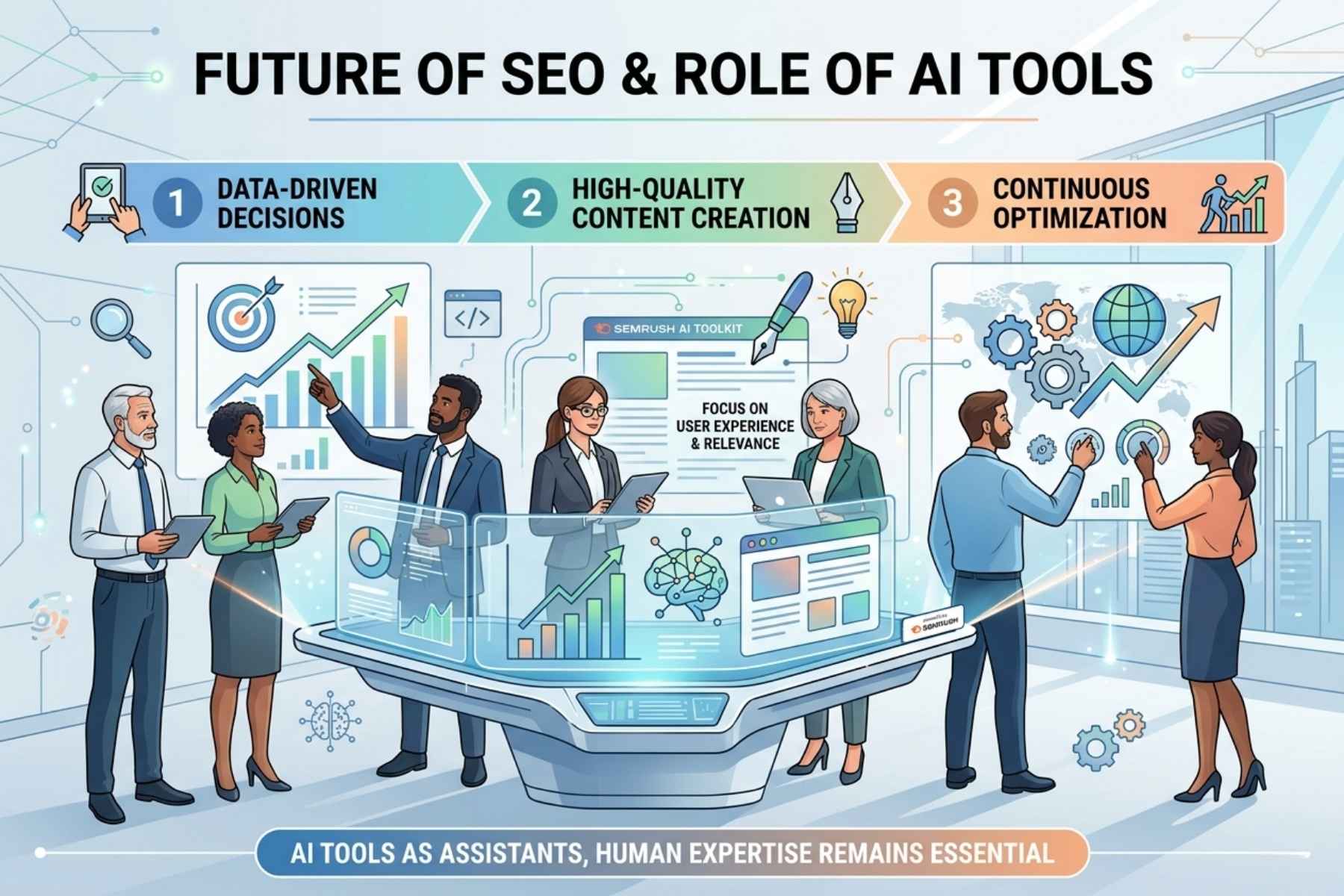
The role of artificial intelligence in SEO will continue to grow. Search engines are becoming more advanced, focusing on user experience, content quality, and relevance.
Tools like the Semrush Toolkit are evolving to meet these changes by providing smarter insights and automation.
In the future, successful SEO strategies will depend on:
- Data-driven decision making
- High-quality content creation
- Continuous optimization
AI tools will act as assistants, but human expertise will remain essential.
Frequently Asked Questions
Is Semrush Toolkit suitable for beginners
Yes, it is suitable for beginners, especially those who are serious about learning SEO. While some advanced features may take time to understand, the platform provides clear guidance and structured workflows.
Can Semrush Toolkit replace human SEO experts
No, it cannot fully replace human expertise. It provides valuable insights and automation, but strategic thinking and creativity are still required.
How long does it take to see results
SEO results vary depending on competition, content quality, and consistency. Most users start seeing noticeable improvements within a few weeks to a few months.
Is it better than other SEO tools
The Semrush Toolkit stands out as an all-in-one solution. However, the best tool depends on your specific needs and goals.
Does it help with content writing
It provides suggestions and guidance for content optimization, but human input is necessary to create engaging and valuable content.
Is it worth the investment in 2026
For users who are serious about SEO and long-term growth, the tool offers strong value and can deliver a high return on investment.
Conclusion
The SEO landscape in 2026 is more competitive and complex than ever before. Success requires a combination of strategy, consistency, and the right tools.
The Semrush Toolkit stands out as a comprehensive solution that brings together keyword research, content optimization, competitor analysis, and technical SEO into a single platform. Its AI-driven insights simplify decision making and improve efficiency.
While it requires an investment and a willingness to learn, the benefits it offers make it a powerful asset for anyone looking to grow their online presence.
For beginners, it provides a structured path to understanding SEO. For professionals, it offers advanced tools to refine and scale strategies.
In the end, the effectiveness of the Semrush Toolkit depends on how it is used. When combined with high-quality content and a clear strategy, it has the potential to significantly improve search rankings and drive long-term success.
Explore More: YouTools AI Review 2026: Free AI Tool for Keywords, SEO & Content Creation