A New Mid-Range Contender Enters the Arena
When Google officially announced its latest mid-range smartphone Google Pixel 10a at a starting price of $499, the tech industry immediately took notice. The launch signals more than just another addition to the competitive smartphone market; it represents a strategic move to redefine what consumers should expect from an affordable flagship alternative.
Google has consistently positioned its “A-series” devices as value-driven smartphones that deliver premium-level experiences without flagship pricing. With Google Pixel 10a, the company aims to push that philosophy even further. Combining powerful AI capabilities, an advanced camera system, a refined design language, and optimized Android integration, this device is crafted to appeal to both everyday users and tech enthusiasts.
In a world where smartphone prices frequently cross the $1,000 mark, Google Pixel 10a arrives as a compelling option for those who demand high performance without financial compromise. But does it truly deliver flagship-level performance at a mid-range cost? Let’s dive deep into everything you need to know.
Why the $499 Google Pixel 10a Matters More Than You Think

The global smartphone market in 2026 is saturated with incremental upgrades. Brands compete aggressively in the mid-range category, where value, battery life, camera performance, and AI integration determine success.
The release of Google Pixel 10a at $499 isn’t just another product announcement, it’s a statement. Google is doubling down on artificial intelligence as the defining feature of modern smartphones. Rather than focusing purely on raw hardware upgrades, this device emphasizes software intelligence, seamless user experience, and real-world usability.
For consumers, this shift is significant. It suggests that the future of smartphones may not rely solely on megapixels or processor speeds but on how intelligently devices adapt to user needs.
Pricing Strategy & Market Positioning
At $499, the Google Pixel 10a sits in the upper mid-range segment. This pricing places it in direct competition with devices from Samsung’s Galaxy A-series and Apple’s more affordable iPhone models. However, Google’s strength lies in software optimization and AI-driven features.
Google Pixel 10a is strategically priced to attract:
- Budget-conscious professionals
- Students seeking a premium experience
- Android enthusiasts
- Photography lovers
- Users upgrading from older Pixel models
By maintaining an accessible price point, Google ensures broader adoption while reinforcing its ecosystem of services, including Google Photos, Google Assistant, and advanced AI tools.
Design & Build Quality: Subtle Yet Sophisticated
Google has refined its design language over recent generations, and this device continues that evolution. The Google Pixel 10a features a minimalist aesthetic, smooth matte finish, and a durable aluminum frame. The signature horizontal camera bar remains a distinctive element, offering both visual identity and structural balance.
The device is expected to include:
- A 6.1-inch OLED display
- Slim bezels
- Corning Gorilla Glass protection
- IP67 water and dust resistance
- Lightweight ergonomic design
Unlike many competitors that prioritize flashy aesthetics, Google focuses on functional elegance. The materials feel premium without driving up costs, and the compact size ensures comfortable one-handed usage.
Google Pixel 10a strikes a careful balance between affordability and sophistication, ensuring users don’t feel like they are compromising on build quality.
Display Experience: Bright, Smooth, and Efficient
A smartphone’s display is central to user experience, and Google understands this well. The Pixel 10a is rumored to feature a Full HD+ OLED panel with a 120Hz refresh rate, a notable upgrade in the A-series lineup.
Key display highlights include:
- 120Hz adaptive refresh rate
- HDR support
- Always-on display functionality
- Enhanced brightness for outdoor visibility
For streaming, gaming, and daily browsing, the display aims to deliver vibrant colors and smooth transitions. Google’s software optimization ensures that the refresh rate adjusts dynamically to conserve battery life when high performance isn’t required.
This thoughtful integration of hardware and software reinforces why Google Pixel 10a could become one of the most balanced devices in its price category.
Performance & Processor: Powered by AI Intelligence
Under the hood, the Google Pixel 10a is expected to run on Google’s custom Tensor chipset — designed specifically to enhance machine learning and AI tasks rather than focusing solely on benchmark numbers.
The benefits of Tensor integration include:
- Real-time voice transcription
- Advanced photo processing
- Smarter battery optimization
- Improved speech recognition
- On-device AI security features
Rather than competing purely on raw speed, Google optimizes performance around intelligent functionality. Everyday tasks such as app switching, video streaming, and multitasking feel fluid thanks to close hardware-software integration.
The inclusion of the Tensor chip ensures that AI isn’t just a marketing term it becomes part of the daily user experience.
Software Advantage: Clean Android Experience
One of the strongest selling points of any Google Pixel device is its pure Android experience. The Google Pixel 10a ships with the latest version of Android, free from heavy manufacturer skins or bloatware.
Users can expect:
- Immediate Android updates
- Extended security patch support
- Seamless integration with Google services
- AI-driven personalization
- Enhanced privacy controls
This clean ecosystem gives the Google Pixel 10a a performance advantage over competitors running heavier custom interfaces.
Camera System: Redefining Mid-Range Photography
One of the most compelling reasons consumers choose a Google Pixel device has always been the camera and Google Pixel 10a continues that legacy with impressive computational photography.
While flagship smartphones often rely on multiple lenses and high megapixel counts, Google focuses on intelligent image processing. Instead of overwhelming users with hardware gimmicks, it refines software algorithms that transform everyday photos into professional-looking shots.
Expected Camera Specifications
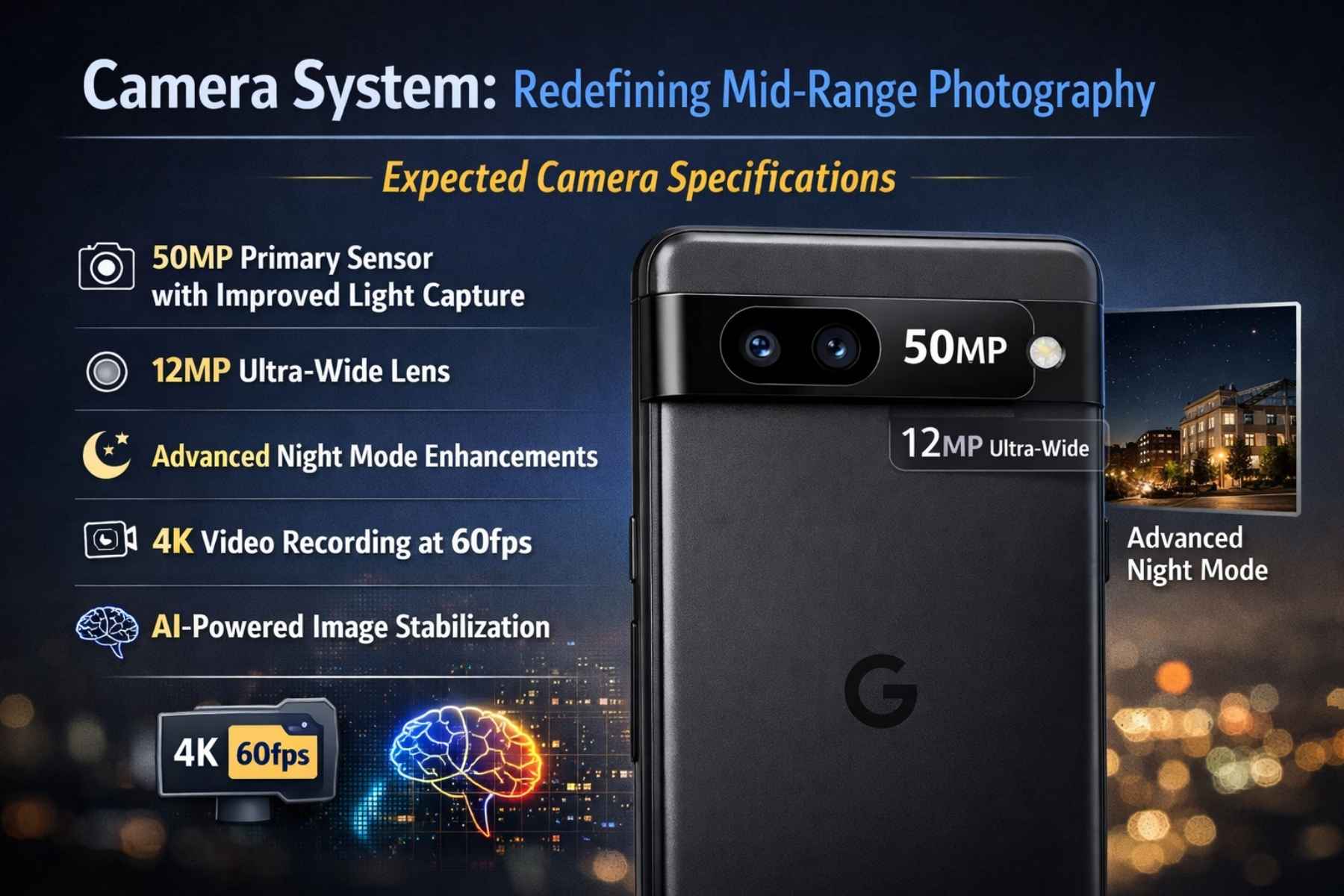
Although exact details may vary by region, the Google Pixel 10a is expected to feature:
- 50MP primary sensor with improved light capture
- 12MP ultra-wide lens
- Advanced Night Mode enhancements
- 4K video recording at 60fps
- AI-powered image stabilization
What makes the difference isn’t just the hardware it’s how Google’s Tensor chip processes every shot.
Computational Photography: Smarter Than Ever
Google pioneered computational photography in earlier Pixel models, and Google Pixel 10a builds on that foundation.
Key Camera Features
1. Night Sight 2.0: Enhanced low-light performance ensures clearer, brighter images even in challenging environments.
2. Magic Eraser Improvements: Users can remove unwanted objects or distractions from photos with improved precision.
3. Real Tone Technology: More accurate skin tones across diverse complexions a feature that reinforces inclusivity.
4. AI Portrait Enhancement: Sharper subject detection and more natural background blur.
5. Super Res Zoom: AI-powered zoom enhances digital magnification without heavy loss of detail.
These features make the Google Pixel 10a ideal for social media creators, travelers, and everyday users who want effortless photography without manual tweaking.
Video Performance: Stability Meets Intelligence
Video capabilities have become increasingly important in 2026, especially for short-form content creators. The Google Pixel 10a focuses on stabilization and color accuracy.
Expected highlights include:
- AI-based cinematic stabilization
- Improved HDR video
- Clear voice isolation in noisy environments
- Smart audio enhancement
Rather than simply boosting resolution numbers, Google enhances clarity and usability making Google Pixel 10a suitable for vloggers and casual filmmakers alike.
AI Features: The Core Strength
Artificial intelligence is where the Google Pixel 10a truly differentiates itself.
Unlike competitors who treat AI as an add-on, Google integrates machine learning deeply into system operations.
Smart Assistant Integration
Built-in Google Assistant improvements allow:
- Faster voice recognition
- Context-aware responses
- On-device processing for privacy
- Real-time language translation
AI Call Screening
Spam detection and smart call filtering reduce interruptions and enhance productivity.
Adaptive Battery & Performance
Google’s AI learns user habits to prioritize frequently used apps while conserving energy in the background.
This intelligent resource allocation ensures that Google Pixel 10a performs efficiently throughout the day.
Battery Life & Charging
Battery life remains a major concern for mid-range smartphone buyers. Google addresses this with a balanced approach rather than chasing extreme fast-charging numbers.
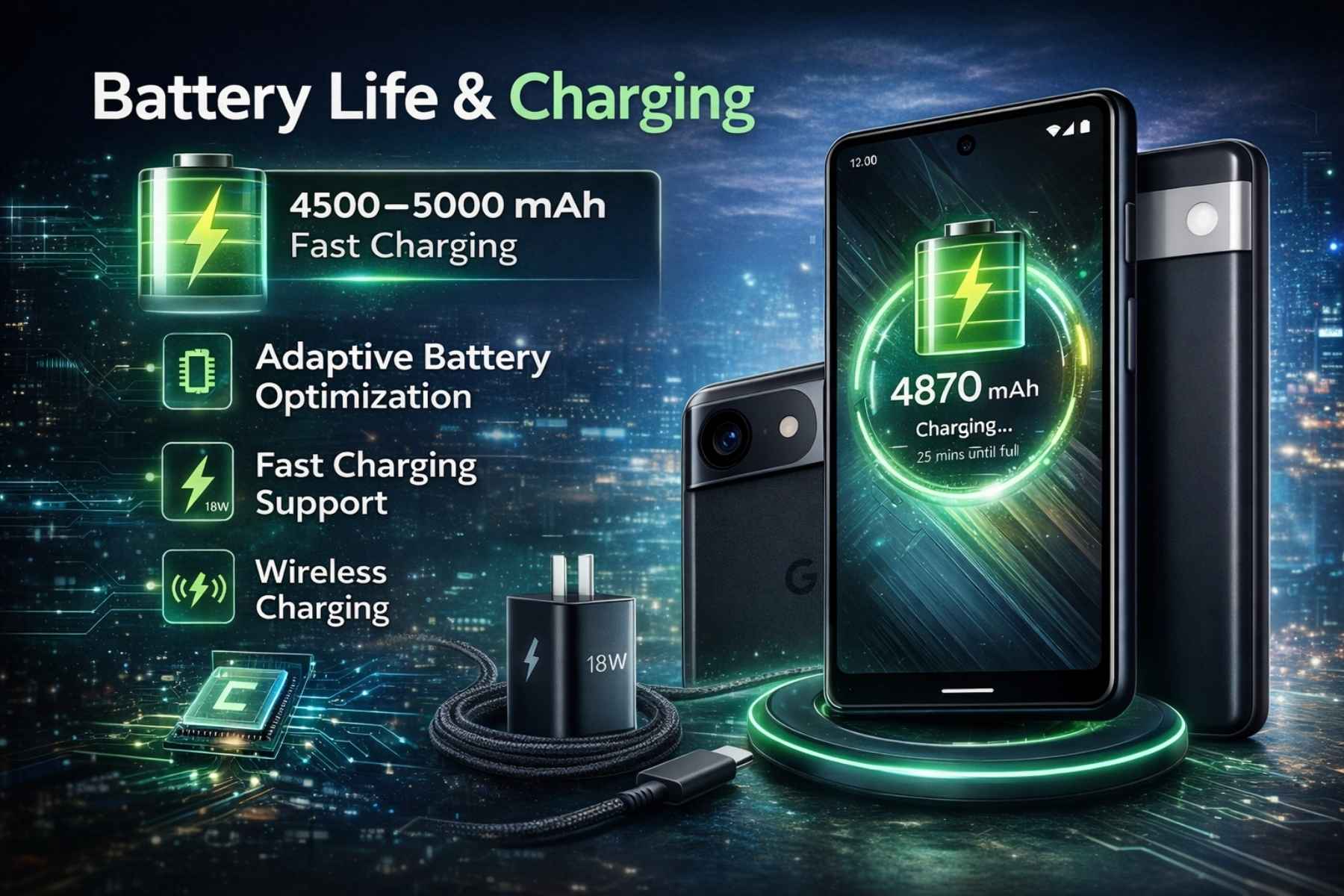
Expected Battery Features
- Approximately 4,500–5,000mAh capacity
- Adaptive battery optimization
- Fast charging support
- Wireless charging capability (region dependent)
In real-world usage scenarios including social media browsing, video streaming, navigation, and photography the Google Pixel 10a is expected to comfortably last a full day.
Google’s adaptive charging system also protects long-term battery health by adjusting charging speeds overnight.
Security & Privacy Enhancements
With increasing global concerns about data privacy, Google continues to emphasize security in its devices.
Google Pixel 10a includes:
- Titan M security chip
- On-device AI encryption
- Regular security updates
- Biometric authentication improvements
This makes the device suitable for professionals who prioritize digital safety.
Real-World Performance: Everyday Usage Test
While benchmarks are useful, daily usability matters more. In typical scenarios:
- App launching feels fast and responsive
- Multitasking runs smoothly with optimized RAM management
- Gaming performance remains stable for casual and mid-level games
- AI features enhance productivity rather than draining resources
Google’s philosophy prioritizes balance. The Google Pixel 10a is not necessarily built to dominate performance charts but to deliver consistent, reliable everyday functionality.
Comparison with Competitors
At $499, the Google Pixel 10a competes directly with mid-range models from:
- Samsung
- Apple
- OnePlus
Where Pixel 10a Stands Out
- Superior AI camera processing
- Clean Android experience
- Faster OS updates
- Integrated Google ecosystem
Where Competitors May Lead
- Faster charging speeds
- Larger display options
- Higher raw benchmark scores
However, for users who value software optimization over pure hardware specs, Google Pixel 10a becomes a compelling choice.
Who Should Buy the Pixel 10a?
This device is ideal for:
✔ Students
✔ Budget-conscious professionals
✔ Android purists
✔ Content creators
✔ Photography enthusiasts
It may not target heavy gamers demanding flagship-level GPU performance, but it excels in everyday productivity and creativity.
Long-Term Software Support: A Major Advantage
One of the strongest competitive advantages of Google Pixel devices has always been software longevity. With Google Pixel 10a, this tradition is expected to continue and possibly improve.
Unlike many mid-range Android smartphones that receive limited updates, Google Pixel devices typically offer extended OS upgrades and consistent security patches. This matters significantly for buyers investing $499 in a smartphone.
Expected Software Commitment
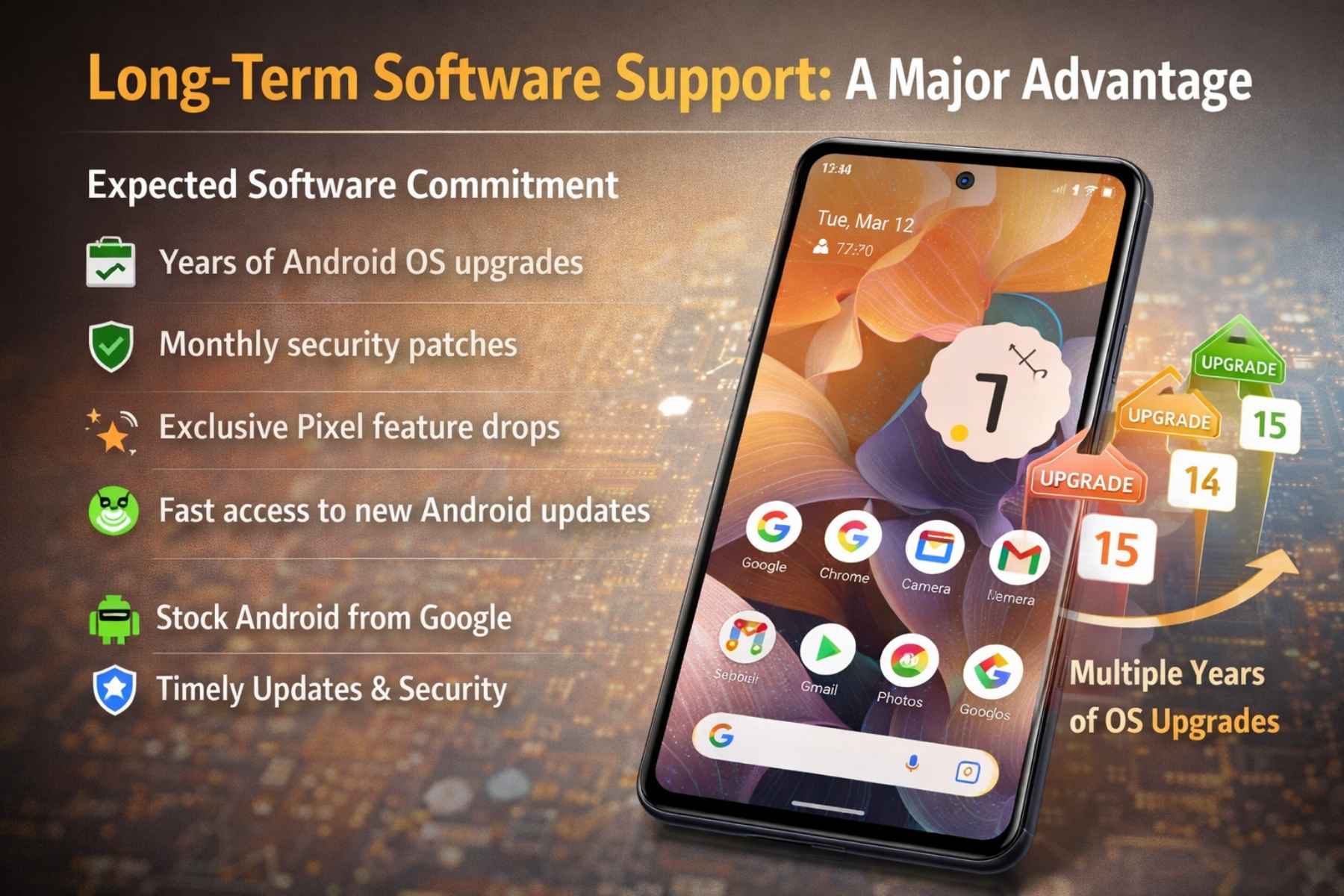
Users can anticipate:
- Multiple years of Android OS upgrades
- Regular monthly security patches
- Exclusive Pixel feature drops
- Early access to new Android innovations
Because the device runs stock Android directly from Google, updates roll out faster compared to many competitors that rely on heavy custom skins.
For long-term users, this means smoother performance, improved security, and sustained device relevance well beyond the first year of ownership.
Pixel Feature Drops: Continuous Innovation
One of Google’s unique strategies is “Pixel Feature Drops” periodic software updates that introduce new functionalities without requiring new hardware.
With Google Pixel 10a, users may receive:
- AI-powered photo editing enhancements
- New personalization options
- Advanced accessibility tools
- Improved Google Assistant capabilities
- Security feature upgrades
This approach makes the device feel fresh months and even years after purchase.
Sustainability & Environmental Responsibility
In 2026, sustainability is no longer optional; it’s expected. Google has increasingly emphasized eco-friendly manufacturing and packaging.
The Google Pixel 10a aligns with this vision by:
- Using recycled materials in construction
- Offering plastic-free packaging
- Improving energy efficiency
- Supporting long-term device durability
Consumers worldwide are more environmentally conscious, and choosing Google Pixel 10a supports a brand working toward carbon neutrality goals.
User Experience: Simplicity Meets Intelligence
A smartphone is only as good as the experience it delivers daily. Google prioritizes ease of use, clarity, and seamless interaction.
Clean Interface
Without unnecessary third-party apps or intrusive ads, the Google Pixel interface feels:
- Minimal
- Fast
- Organized
- User-friendly
Smart Personalization
AI adapts the device to user habits, including:
- Smart app suggestions
- Predictive text enhancements
- Automatic photo categorization
- Context-aware reminders
These small but meaningful optimizations create a frictionless experience.
Performance Over Time: Does It Age Well?
Mid-range smartphones sometimes slow down after extended usage. However, Google’s optimized software-hardware integration helps maintain performance stability.
With adaptive battery and AI resource management, Google Pixel 10a is designed to remain efficient even after heavy usage cycles.
Regular updates also prevent software fragmentation, which often causes performance degradation in competing devices.
Global Availability & Market Influence
The Pixel 10a is expected to launch across major markets, including:
- United States
- United Kingdom
- Canada
- India
- Select European and Asian regions
The $499 pricing ensures global competitiveness, especially in markets where flagship pricing is prohibitively high.
Google’s strong ecosystem including Gmail, Google Maps, Google Photos, and YouTube further strengthens the device’s worldwide appeal.
Pros and Cons: Balanced Perspective
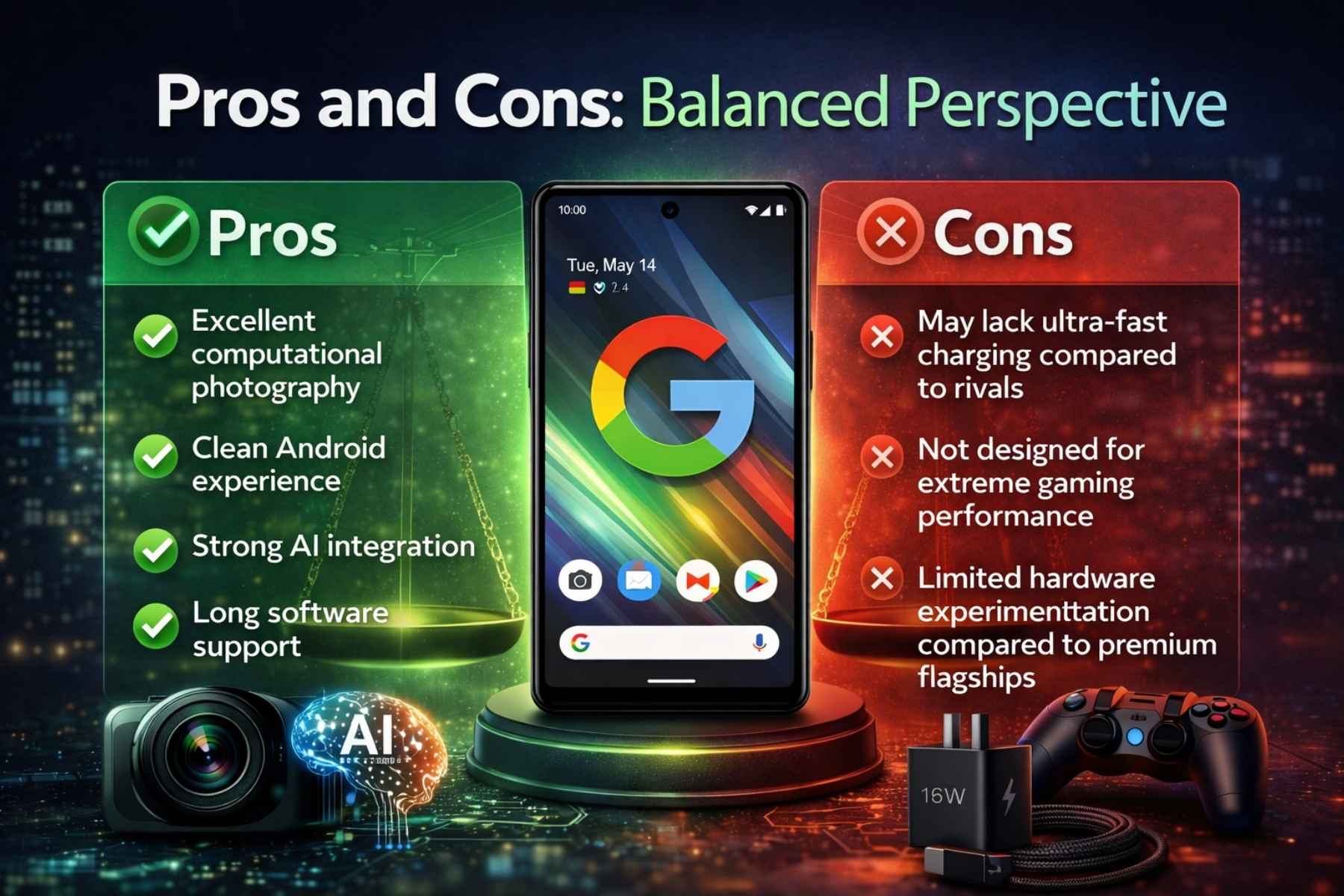
Pros
- Excellent computational photography
- Clean Android experience
- Strong AI integration
- Long software support
Competitive pricing
Cons
- May lack ultra-fast charging compared to rivals
- Not designed for extreme gaming performance
- Limited hardware experimentation compared to premium flagships
Despite minor limitations, Google Pixel 10a delivers strong value for its price category.
How Pixel 10a Strengthens Google’s Ecosystem
Google’s broader strategy extends beyond hardware sales. Each Google Pixel device acts as a gateway into its ecosystem.
By integrating services like:
- Google Assistant
- Google Photos
- Google Drive
- YouTube Premium integration
Google creates a connected experience that extends across devices, laptops, smart home products, and wearables.
This ecosystem synergy adds long-term value to the Google Pixel 10a beyond its hardware capabilities.
Mid-Range Smartphone Trends in 2026
The mid-range segment is evolving rapidly. Buyers now expect:
- High refresh rate displays
- AI camera processing
- 5G connectivity
- Long-term software support
- Premium build materials
Google Pixel 10a aligns perfectly with these expectations, positioning itself as a forward-looking device rather than a compromise option.
Is the Pixel 10a Worth $499?
For users prioritizing:
- Camera quality
- AI innovation
- Software reliability
- Clean Android interface
The Pixel 10a presents strong value.
However, for those seeking maximum raw gaming power or ultra-fast charging speeds, other models may offer better alternatives.
Ultimately, the device excels where it matters most: real-world daily performance.
Complete Specifications Overview
Below is a detailed look at the expected hardware and software specifications of Google Pixel 10a. While exact configurations may vary by region, the following reflects its anticipated global standard model.
Display
- 6.1-inch OLED panel
- Full HD+ resolution
- 120Hz adaptive refresh rate
- HDR support
- Gorilla Glass protection
Performance
- Google Tensor chipset
- 8GB RAM
- 128GB / 256GB storage options
- 5G connectivity
- Wi-Fi 6E support
- Bluetooth 5.3
Camera System
- 50MP main sensor
- 12MP ultra-wide lens
- AI-powered computational photography
- 4K video recording at 60fps
- Night Sight enhancement
- Super Res Zoom
Battery & Charging
- 4,500–5,000mAh battery
- Fast wired charging
- Adaptive charging optimization
- Wireless charging support (region dependent)
Security
- Titan M security chip
- In-display fingerprint scanner
- Face unlock (software-assisted)
Software
- Latest Android version
- Guaranteed OS updates
- Regular security patches
- Pixel Feature Drops
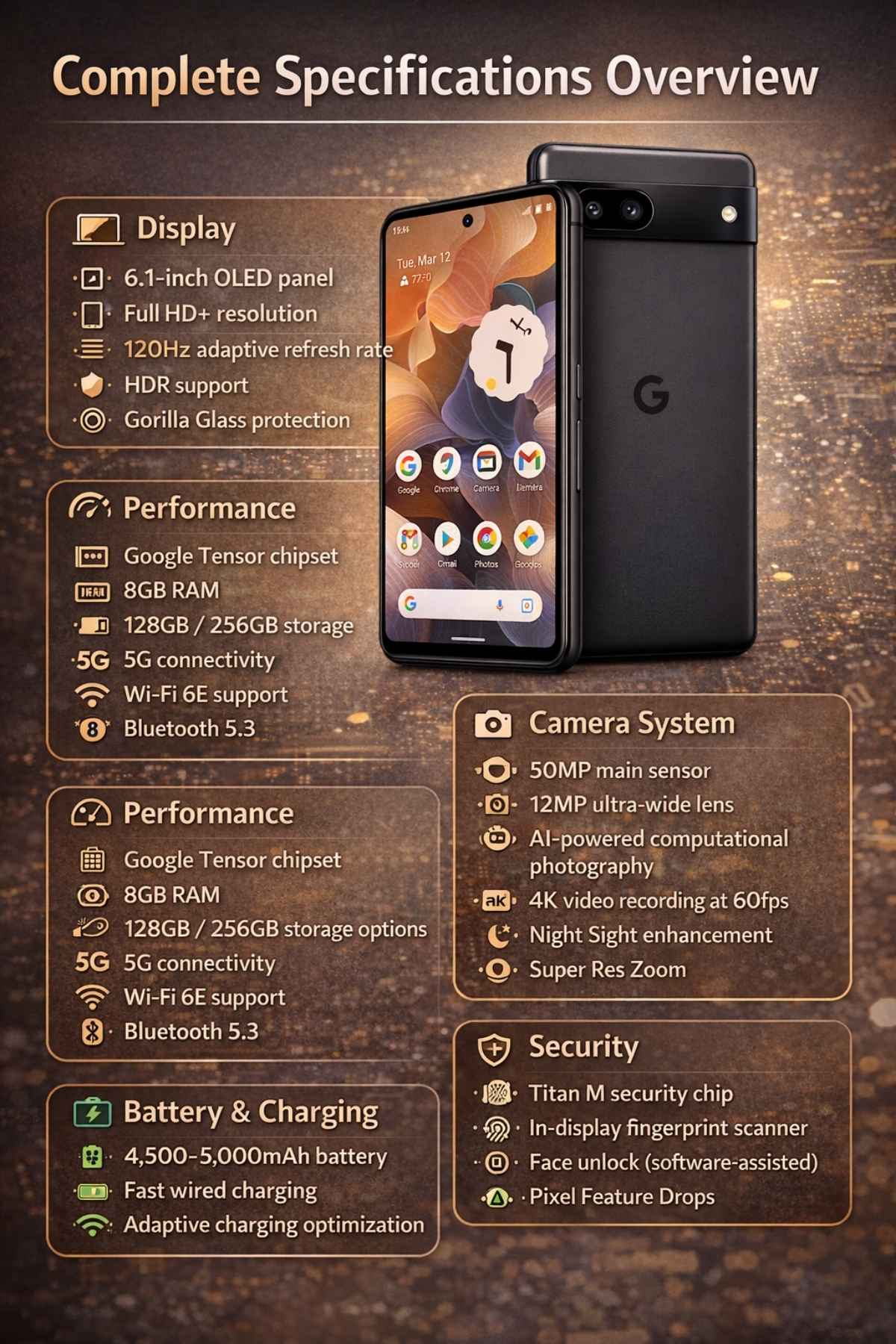
This balanced hardware configuration ensures that Google Pixel 10a remains competitive without inflating the price.
Advanced AI Use Cases: Beyond Photography
Artificial intelligence is not limited to camera enhancements. Google integrates AI across multiple real-world scenarios.
1. Real-Time Language Translation
Travelers and international professionals benefit from on-device translation capabilities that work quickly and securely.
2. Smart Reply & Email Assistance
AI helps draft responses in Gmail and messaging apps, saving time and increasing productivity.
3. Context-Aware Notifications
The device filters less important notifications and highlights what matters most based on user behavior.
4. Call Screening & Spam Protection
Automated call filtering reduces interruptions and enhances privacy.
5. AI-Powered Search Within Photos
Users can search images using keywords like “beach sunset” or “birthday party” without manual tagging.
These intelligent functions elevate Google Pixel 10a from being just a smartphone to a smart assistant in your pocket.
Gaming Performance: Casual but Capable
While not positioned as a gaming powerhouse, the Pixel 10a handles popular titles smoothly at medium to high settings.
Optimized GPU management ensures stable frame rates without overheating. Casual gamers will find it reliable, though competitive high-frame-rate gamers may prefer flagship alternatives.
Connectivity & Network Capabilities
The smartphone includes advanced connectivity features such as:
- Global 5G band support
- Enhanced GPS precision
- Dual SIM support (region dependent)
- NFC for contactless payments
For professionals and frequent travelers, these features add everyday convenience.
Comparison with Previous Pixel A-Series Models
Compared to earlier A-series devices, the Google Pixel 10a introduces:
- Higher refresh rate display
- Improved AI processing
- Enhanced camera stabilization
- Better battery optimization
- Refined build materials
These upgrades demonstrate Google’s consistent evolution in the mid-range category.
Expert Buying Advice
Before purchasing Google Pixel 10a, consider the following:
Buy It If:
- You prioritize camera quality over raw hardware benchmarks
- You want long-term Android updates
- You prefer a clean, ad-free interface
- You value AI-driven features
Consider Alternatives If:
- You require ultra-fast charging
- You play competitive, graphics-intensive games daily
- You prefer larger 6.7-inch+ displays
For most mainstream users, however, the Google Pixel 10a strikes a near-perfect balance.
Long-Term Value Analysis
When evaluating a mid-range smartphone, the most important question is not simply whether it performs well on day one but whether it continues delivering value over time.
With Google Pixel 10a, long-term usability appears to be one of its strongest advantages. Thanks to its clean Android experience, regular software updates, and AI-driven optimization, the device is engineered to remain relevant for years rather than months.
Unlike many mid-range competitors that lose performance efficiency over time due to heavy software skins, Google’s tightly integrated hardware and software approach ensures smoother aging. The Tensor chipset, while not benchmark-focused, is built specifically to improve machine learning tasks meaning features may actually improve through updates rather than stagnate.
For users who upgrade every three to four years, this is a critical factor.
Who Should Upgrade to Pixel 10a?
Upgrade If You Are Using:
- A Pixel device older than three generations
- An entry-level Android phone with limited updates
- A device with outdated camera processing
- A smartphone lacking AI-powered features
For users currently holding older A-series models, Google Pixel 10a represents a meaningful leap in display smoothness, computational photography, and overall responsiveness.
However, those already using a recent flagship device may not see a dramatic performance difference unless they prioritize Google’s ecosystem and AI features.
Real-World Use Case Scenarios
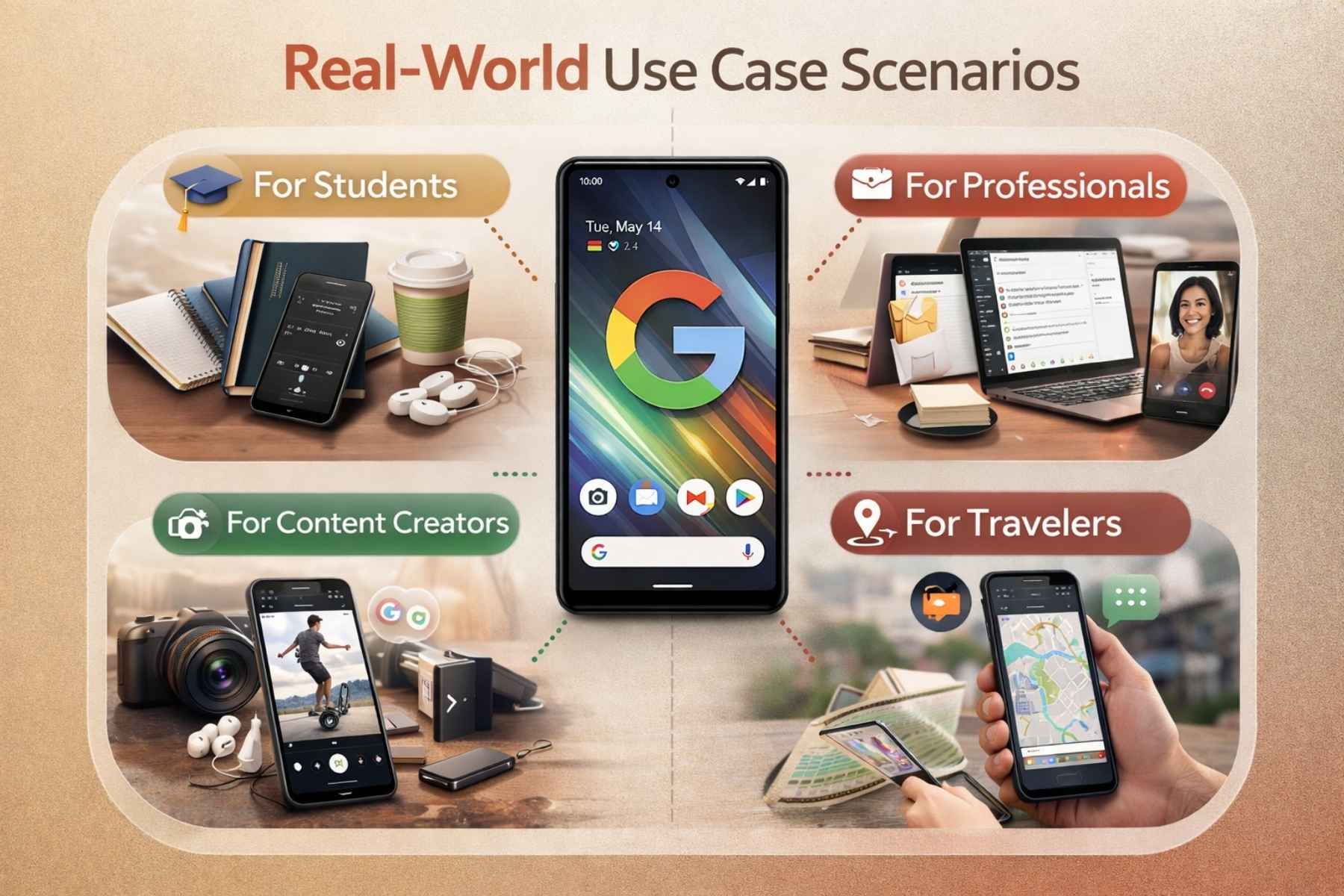
To better understand the device’s practicality, let’s explore how it fits into daily routines:
For Students
- Reliable battery life throughout the day
- Fast note-taking and voice transcription
- Affordable price point
- Excellent camera for content creation
For Professionals
- Secure communication features
- AI-assisted email drafting
- Clear video calling performance
- Smooth multitasking
For Content Creators
- Impressive image processing
- Stabilized video recording
- Smart photo editing tools
- Easy sharing across Google platforms
For Travelers
- Real-time language translation
- Accurate navigation
- Strong mobile network support
- Durable build quality
These scenarios highlight how Google Pixel 10a adapts to different lifestyles without requiring flagship pricing.
Strengths That Define Pixel 10a
Across its feature set, several standout qualities emerge:
- AI-first software experience
- Best-in-class mid-range photography
- Clean Android interface
- Long-term update commitment
- Balanced performance
- Thoughtful design
Google continues refining what truly matters instead of chasing unnecessary hardware competition.
Areas Where It Could Improve
While impressive, no device is flawless. Potential limitations include:
- Charging speeds may not match certain competitors
- Gaming performance may not satisfy extreme users
- Limited color or storage options depending on region
Still, these trade-offs are understandable given the price strategy.
How It Competes in the Global Smartphone Landscape
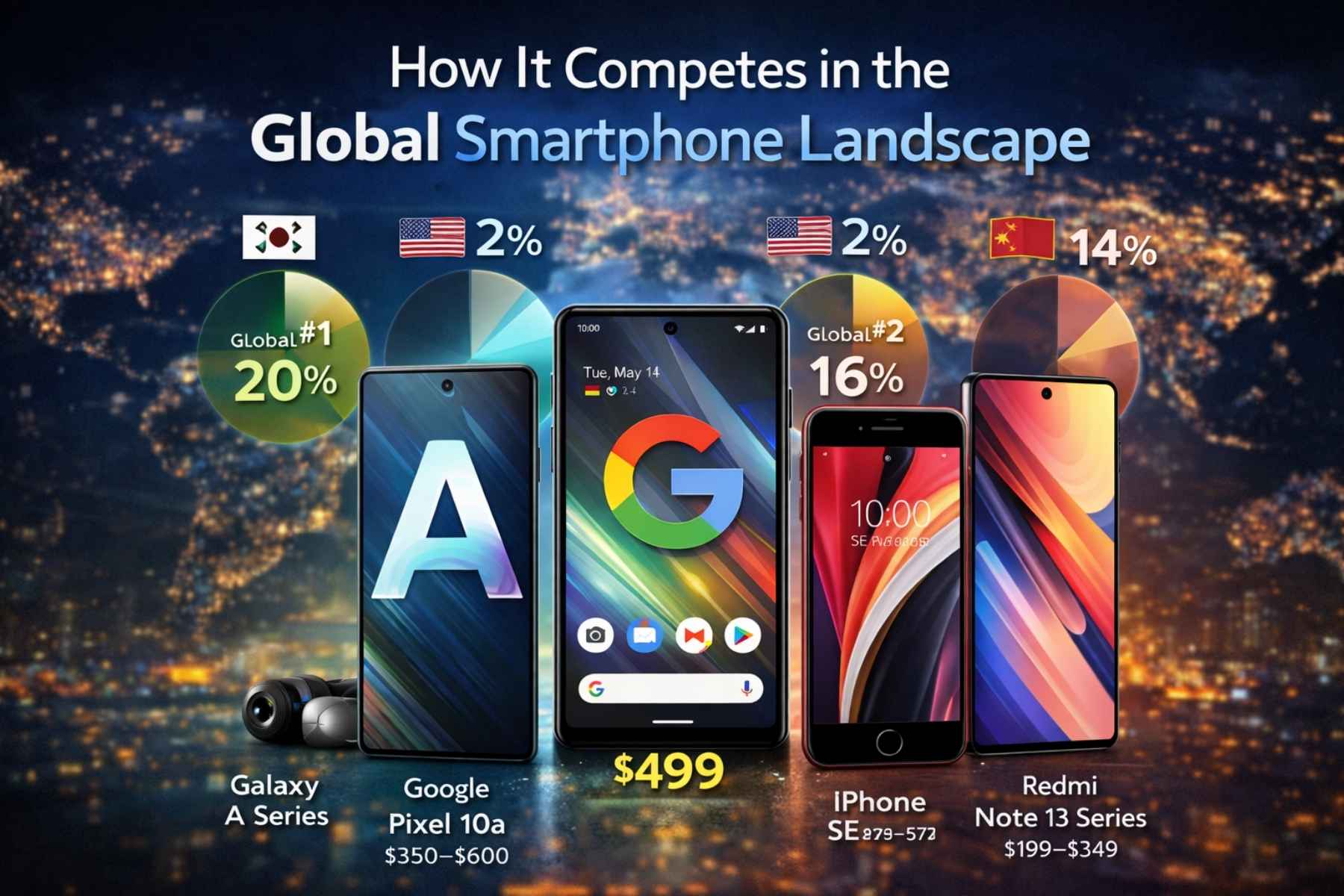
In the broader smartphone ecosystem, the Google Pixel 10a competes with mid-range devices from:
- Samsung
- Apple
- OnePlus
Where competitors often focus on aggressive hardware numbers, Google differentiates through intelligent software integration.
This approach reflects a shift in consumer priorities: users increasingly value convenience, reliability, and AI enhancement over raw specifications.
SEO-Optimized Summary
The launch of Google Pixel 10a at $499 positions it as one of the most compelling mid-range smartphones of 2026. It blends AI innovation, computational photography, refined design, and long-term software support into a cohesive package.
Rather than competing purely on processor speed or megapixel count, Google emphasizes real-world usability. The device demonstrates that intelligence and optimization can matter more than raw power.
For buyers seeking:
- A reliable daily driver
- Exceptional camera quality
- Clean Android interface
- Strong privacy and security features
- Future-ready AI integration
The Google Pixel 10a emerges as a smart investment.
Frequently Asked Questions
1. Is Google Pixel 10a worth $499?
Yes, for users seeking strong camera performance, AI features, and reliable software support, it offers excellent value.
2. Does the Google Pixel 10a support 5G?
Yes, it includes full 5G connectivity for faster mobile data speeds.
3. How long will the Google Pixel 10a receive updates?
Google typically provides multiple years of Android OS and security updates for Google Pixel devices.
4. Is the Google Pixel 10a good for gaming?
It handles casual and moderate gaming well but is not designed for extreme high-performance gaming.
5. Does it support wireless charging?
Wireless charging support may vary by region, but many models are expected to include it.
6. What makes Google Pixel cameras different?
Google focuses on computational photography powered by AI rather than just increasing megapixel count.
Final Verdict: Is It Worth Buying?
Yes for the majority of mainstream users.
At $499, Google Pixel 10a successfully bridges the gap between affordability and premium experience. It may not be the fastest gaming phone on the market, but it excels in areas that matter most: photography, software reliability, and AI-driven functionality.
Google continues to refine its A-series lineup with thoughtful improvements rather than radical redesigns. The result is a smartphone that feels mature, dependable, and intelligently crafted.
In a competitive global market filled with flashy upgrades and inflated prices, the Google Pixel 10a stands out by doing something refreshingly simple, delivering meaningful innovation at a reasonable cost.
Conclusion
The release of Google Pixel 10a represents more than just another smartphone launch. It signals a broader evolution in how mid-range devices are designed and marketed.
By prioritizing artificial intelligence, computational photography, long-term software support, and environmental responsibility, Google strengthens its position in the global smartphone landscape.
For users who value smart features over marketing hype, the Google Pixel 10a is not merely an alternative to flagship devices, it is a practical, intelligent choice that aligns with modern digital lifestyles.
As the smartphone industry continues shifting toward AI-driven experiences, devices like the Google Pixel 10a may very well define the next era of accessible innovation.
Explore More: Beginner’s Guide to Smart Home Systems: Devices, Features & Installation (2026)